CHEMARTS (18–25 ECTS) is an interdisciplinary minor run jointly by the School of Chemical Engineering (CHEM) and the School of Arts, Design and Architecture (ARTS). It brings together students from different backgrounds to explore bio-based materials and develop new concepts for the sustainable use of biomass. The minor combines scientific materials research with design and creative practice, uses experimental laboratory work, and is strongly student-driven. Designing with Biomass is compulsory for everyone in the minor.

After the minor you will

  • understand the basics of sustainability-driven materials research on bio-based materials

  • know the common working methods in materials research and design practice

  • be able to work across disciplines, both in teams and independently

  • combine knowledge from different fields and apply it to future projects

  • be able to follow developments in materials research and related business

Courses (curriculum 2026–2028)

Code Course ECTS Period Status
CHEM-C2630 Designing with Biomass 3 II Compulsory for all
MUO-E0019 CHEMARTS Project 5–10 III–IV Compulsory for all
JOIN-C8001 Diving into Radical Creativity 3 I–Summer Compulsory for CHEM students
MUO-C0140 Design Bits 2 I–Summer Compulsory for CHEM students
CHEM-C2470 Forests, Wood and Carbon 5 I and V Compulsory for ARTS students, optional for CHEM students
MUO-E5053 Biodesign 9 II Optional
MUO-E5054 Biomaterials research 3 V Optional
CHEM-C2450 Materiaalien ominaisuudet 5 IV Optional for CHEM students
CHEM-C2360 Basics of Biopolymers 5 III–IV Optional for CHEM students

Choose optional courses to reach 18–25 ECTS, and check the minimum scope of a minor in your own degree programme.

Practical information

  • Who can take it: CHEM and ARTS students only. Check the quotas and prerequisites of the individual courses.

  • Application: no separate application process

  • Teachers in charge: Tiina Nypelö (CHEM students), Anna van der Lei (ARTS students)

Administrative contact: Kari Lehti
 

Read more about the CHEMARTS Minor.

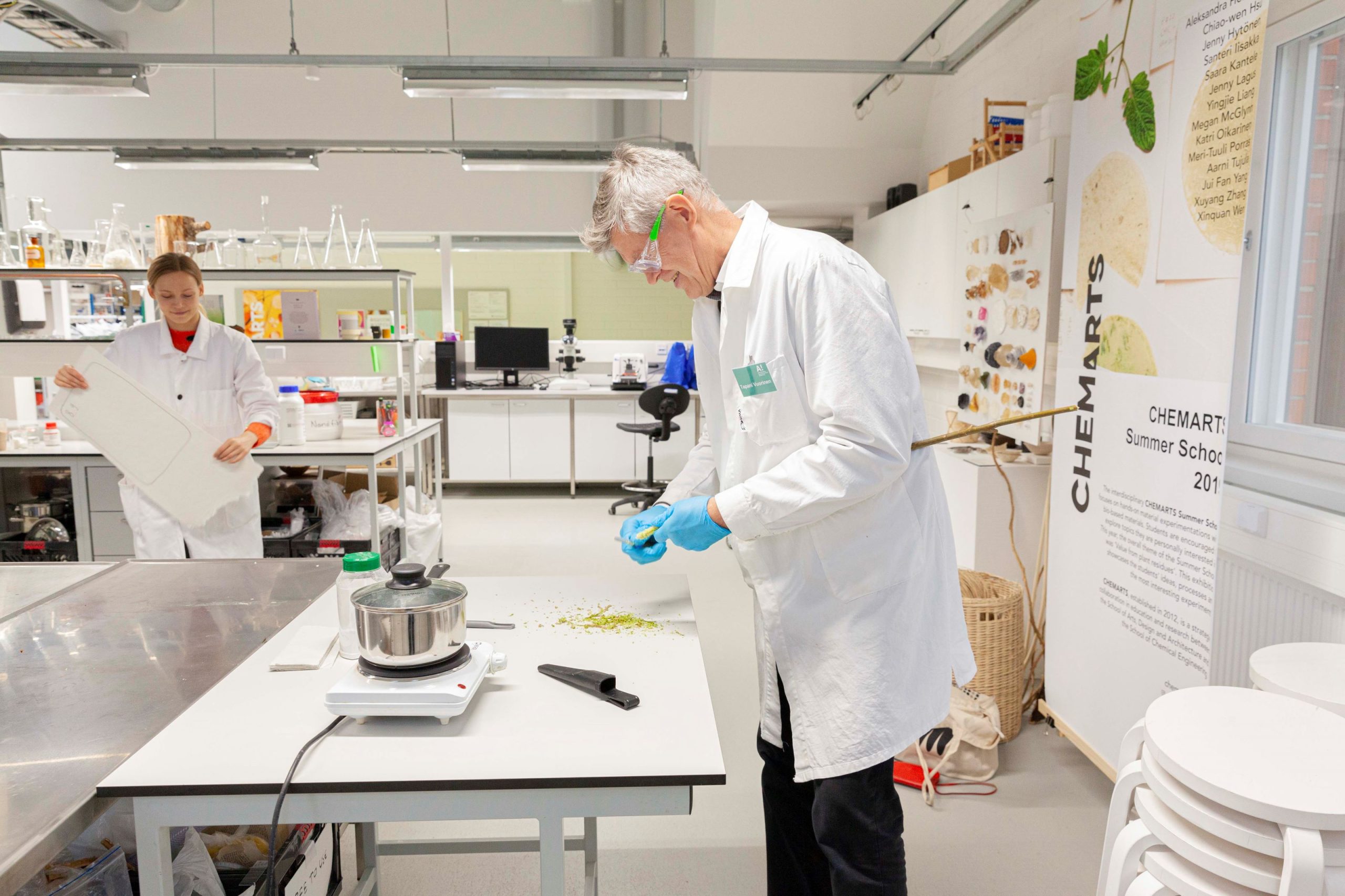
Professor Tapani Vuorinen in CHEMARTS lab
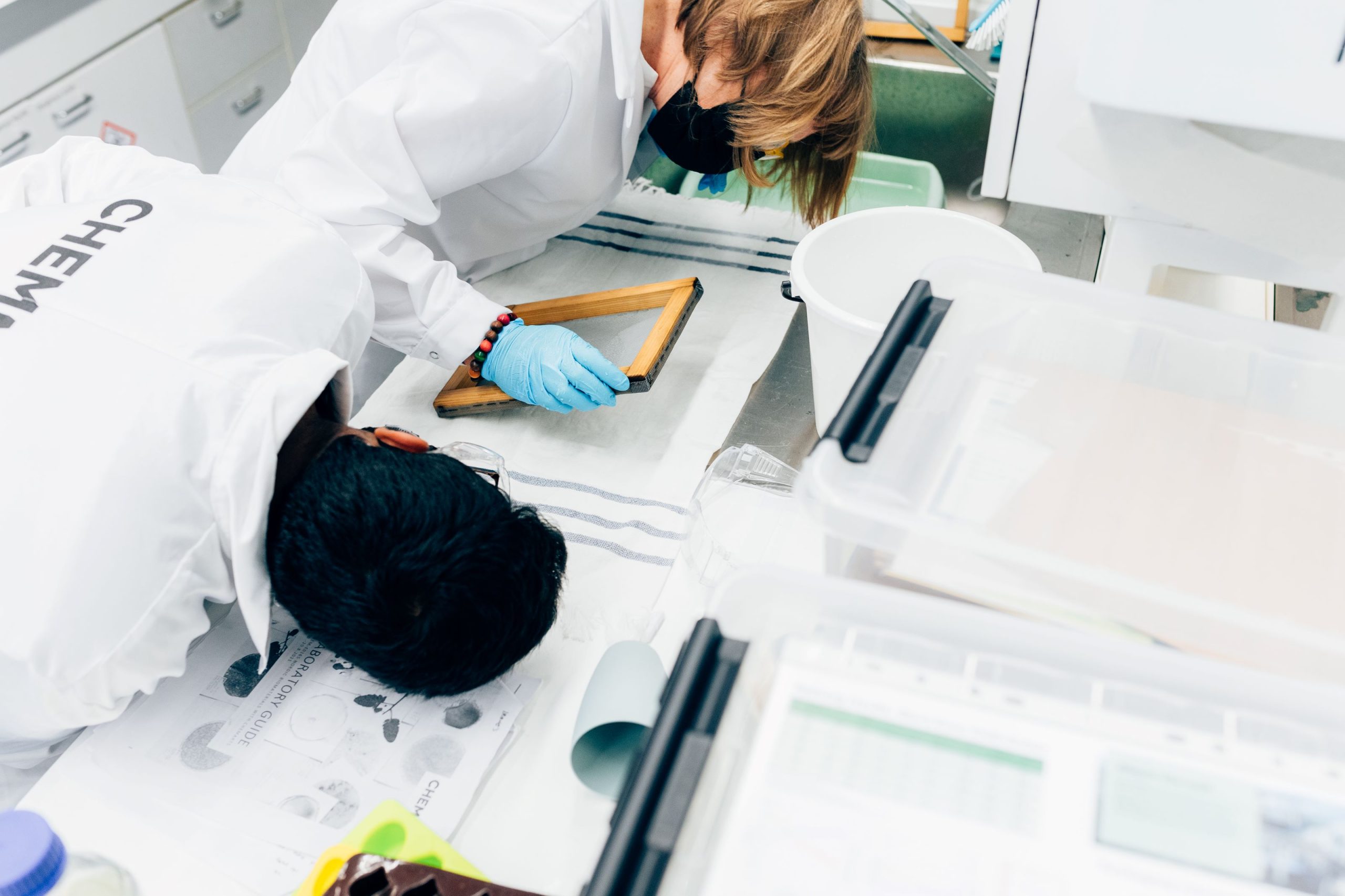
Two students working in Aalto CHEMARTS studio

Courses


Biomaterials research (MUO-E5054)

Biomaterials research (3 ECTS) helps you take your biomaterials work beyond the laboratory bench. In line with the interdisciplinary CHEMARTS approach, the course combines sustainable materials science with design thinking. You learn to place your material experiments within the wider research landscape, identify knowledge gaps and explain why your work matters to different audiences. The aim is to turn your laboratory work into a master’s thesis, a doctoral proposal, a grant application or a startup concept.

After the course you will be able to

  • critically evaluate your own experimental work and see its potential to grow into a larger research project

  • write research proposals for different formats (master’s thesis, doctoral proposal, grant application, startup pitch)

  • bring together perspectives from design, chemistry, materials science and entrepreneurship

  • identify research gaps based on laboratory experiments and the literature

  • present research ideas confidently, orally and in writing

Practical information

  • When: spring, period V (2026–2027 and 2027–2028)

  • Language: English

  • Grading: pass/fail

  • Prerequisites: a bachelor’s degree, and CHEMARTS Project and/or Biodesign

  • Teacher in charge: Barbara Pollini (barbara.pollini@aalto.fi)

See MUO-E5054 in Sisu

Photo: Flower Matter: recycling flower waste into materials. Irene Purasachit’s CHEMARTS master’s thesis work won the Green Product Award, the New European Bauhaus Rising Stars 2022 award and the Ornamo award. Project and photo: Irene Purasachit, 2022.

Biodesign (MUO-E5053)

Biodesign (9 ECTS) is an intensive course that introduces biodesign as an emerging field where design, biology, material experimentation and sustainability meet. You work with living organisms both as a medium and as a research partner, and learn growing protocols, biodesign approaches and the ethical frameworks for working with biological systems. The course combines studio work with seminars.

The first two weeks build the foundations: essential laboratory practices, growing protocols and biomaterial preparation. In the second part you build on these first experiments to reach collective and personal project outcomes. Hands-on experimentation shows you the time scales and ecological dimensions of biological processes, and the agency of living organisms in the design process. You document your process through sketches, lab notes and material samples.

After the course you will be able to

  • understand biodesign as a disciplinary and conceptual framework, and work with and for living organisms

  • use laboratory skills and basic biosecurity protocols confidently and responsibly

  • develop original biodesign concepts and prototypes

  • manage a complex experimental project from ideation to final presentation

  • take a critical position on the ecological, ethical and cultural dimensions of designing with life

Practical information

  • When: autumn, period II (2026–2027 and 2027–2028)

  • Language: English

  • Grading: 0–5

  • Note: as a 9-credit course, Biodesign requires workshop hours in addition to contact teaching. Biodesign students are encouraged to take the CHEMARTS basic course (Designing with Biomass) in the same period II.

  • Teacher in charge: Barbara Pollini (barbara.pollini@aalto.fi)

See MUO-E5053 in Sisu

Algae research and experiments by Nina Riutta.

Photo: Seaweed hat by Nina Riutta. Photographer: Mitja Harvilahti, 2023

CHEMARTS Project (MUO-E0019)

CHEMARTS Project (5–10 ECTS) is the natural next step after Designing with Biomass. You develop your own sustainable material or innovative product idea in the CHEMARTS laboratory, using renewable resources, waste streams or plant biomass. Through hands-on experiments and prototyping you explore new recipes for material development and document your research process systematically. You can work alone, in pairs or in a small group.

At the start of the course you present a project plan with a timeline. Projects are proposed by the students themselves, based on their own interests within the CHEMARTS framework. The experimental process, findings and results are presented in a joint seminar and/or exhibition at the end of the course.

Depending on the number of credits, you are expected to work in the CHEMARTS laboratory one or two full days a week. The remaining hours include the kick-off, research, documentation and the final presentation.

After the course you will

  • have in-depth knowledge of the bio-based materials and technologies you chose

  • be able to plan, carry out, document and present your experimental work and results systematically

  • understand how to develop innovative ideas through interdisciplinary collaboration, material experimentation and practical prototyping

Practical information

  • When: spring, periods III–IV (2026–2027 and 2027–2028)

  • Language: English

  • Grading: 0–5

  • Prerequisite: CHEM-C2630 Designing with Biomass (this course) or CHEM-A1630 CHEMARTS Basics

  • Teachers in charge: Anna-Marie van der Lei (anna.van.der.lei@aalto.fi) and Tiina Nypelö (tiina.nypelo@aalto.fi)

See MUO-E0019 in Sisu

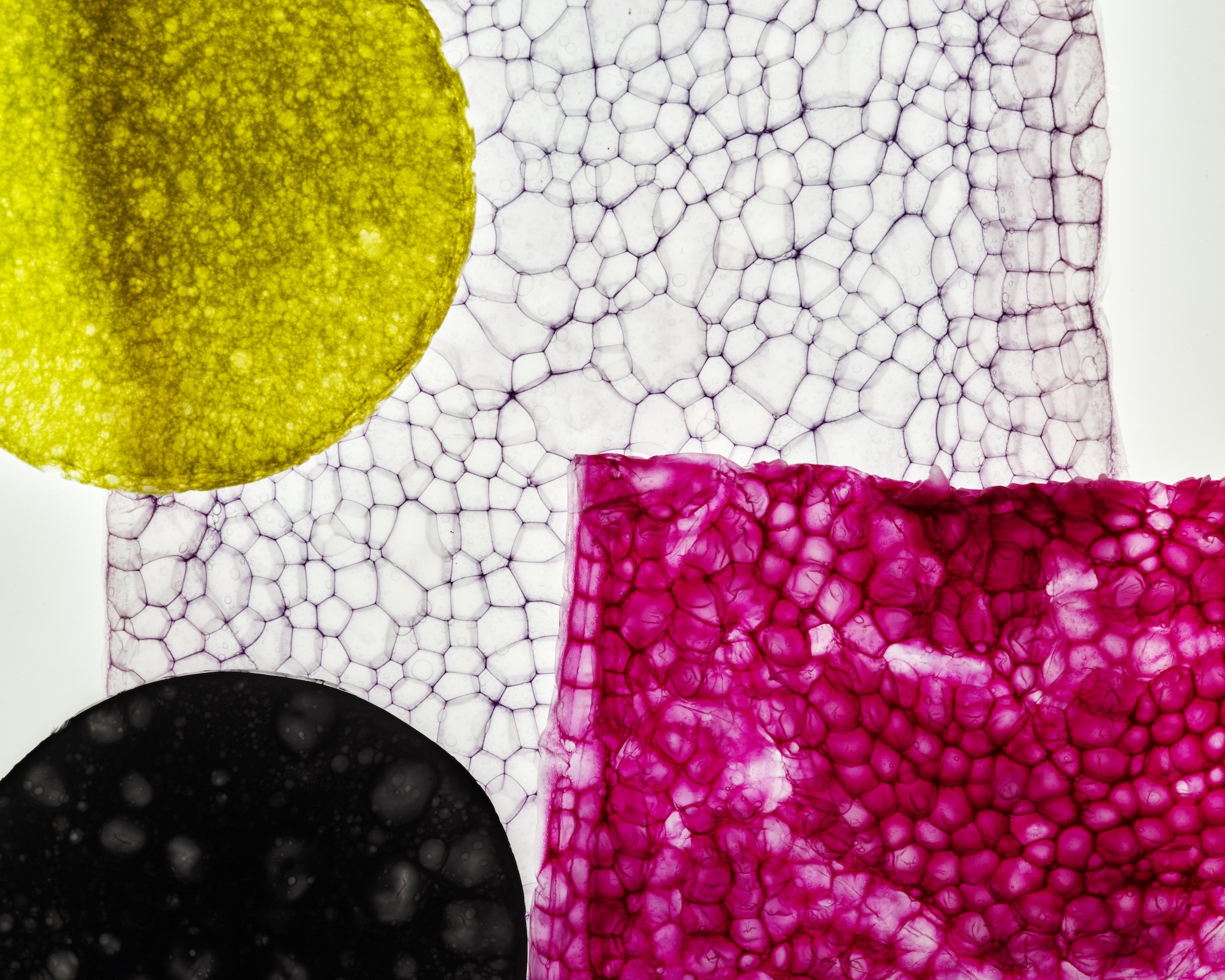
Bio-based and biodegradable packaging - Bubbles with Benefits

Photo: Bubbles with Benefits, a bio-based bubble wrap, started as student work on a CHEMARTS course in 2022 and is now being developed further with Business Finland Research to Business funding.