
Where: Oulu Art Museum, Finland
When: 22.5.–27.9.2026
What: Exhibition
Read more: Tomorrow’s Wardrobe website
From Nature and Lab
What kinds of materials will we use in the future? Where do these materials come from, and how are they produced? Bio-based raw materials offer many possibilities. There is a growing interest in traditional natural materials, such as wool, flax, or nettle, as well as new types of raw materials and manufacturing methods. New uses are being sought for waste materials from industry and agriculture, and materials are grown in laboratories with the help of microbes or fungi. Material development is slow, and there is a need to ensure that new technologies do not create new problems. Only some ideas eventually get adopted for use.
The CHEMARTS collaboration between the School of Chemical Engineering and the School of Arts, Design and Architecture at Aalto University has enabled students to experiment with materials since 2012. Together with the Aalto University Bioinnovation Center, the goal is to open up perspectives on the diverse world of materials and create hope for the future. The most successful ideas can advance into research projects, new innovations, or introduce new materials for arts and crafts.
Further reading: Tomorrow’s Wardrobe (Niinimäki, Kääriäinen, 2026).
Featured work
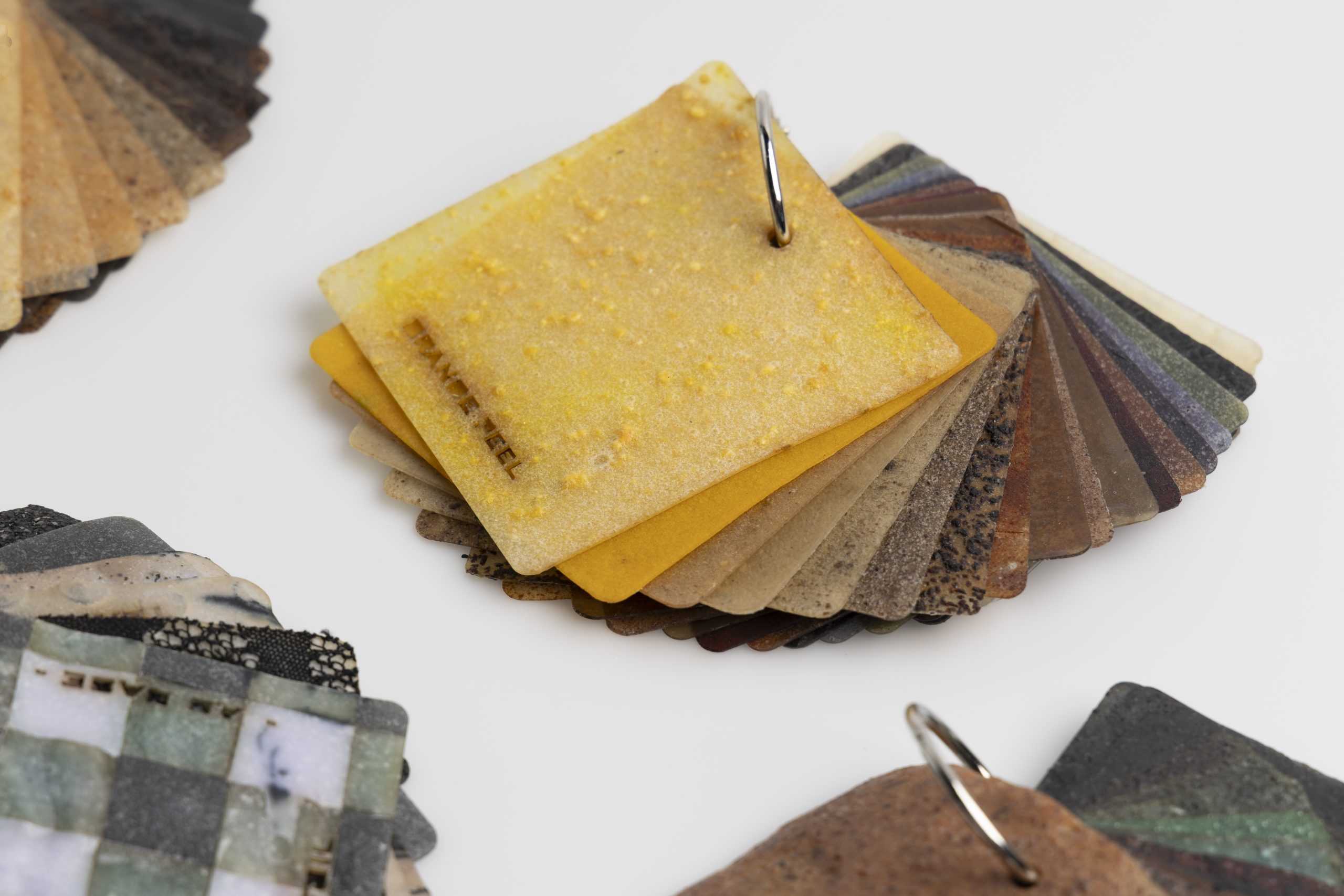
Photo: Esa Kapila.
Material Archive of Living (and Dying)
by Alba Arillo García, 2025
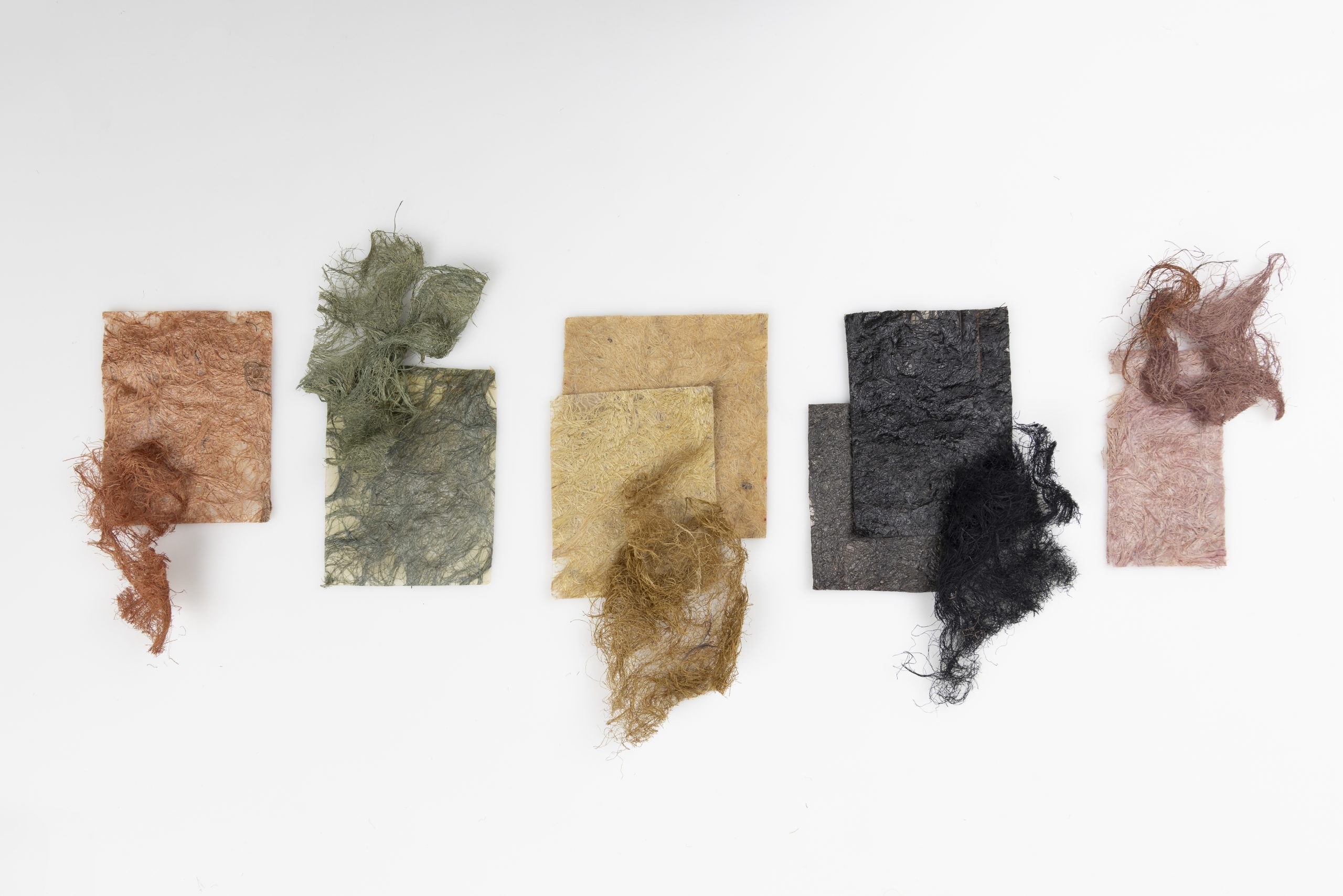
This material archive transforms waste streams into a wide range of regenerative, textile-like materials. Made from organic matter and remnants of everyday life – such as food scraps, discarded cellulose, flowers, plants, or algae – each sheet is unique. Texture, colour, density, surface, and their transformation are all shaped through experimentation at different stages of the design process.
Beyond giving waste a new life cycle, these materials question the notion of permanence and are conceived to accompany the body in burial, biodegrading alongside it as part of a shared process of decomposition and return to the soil.
In collaboration with CHEMARTS Lab.
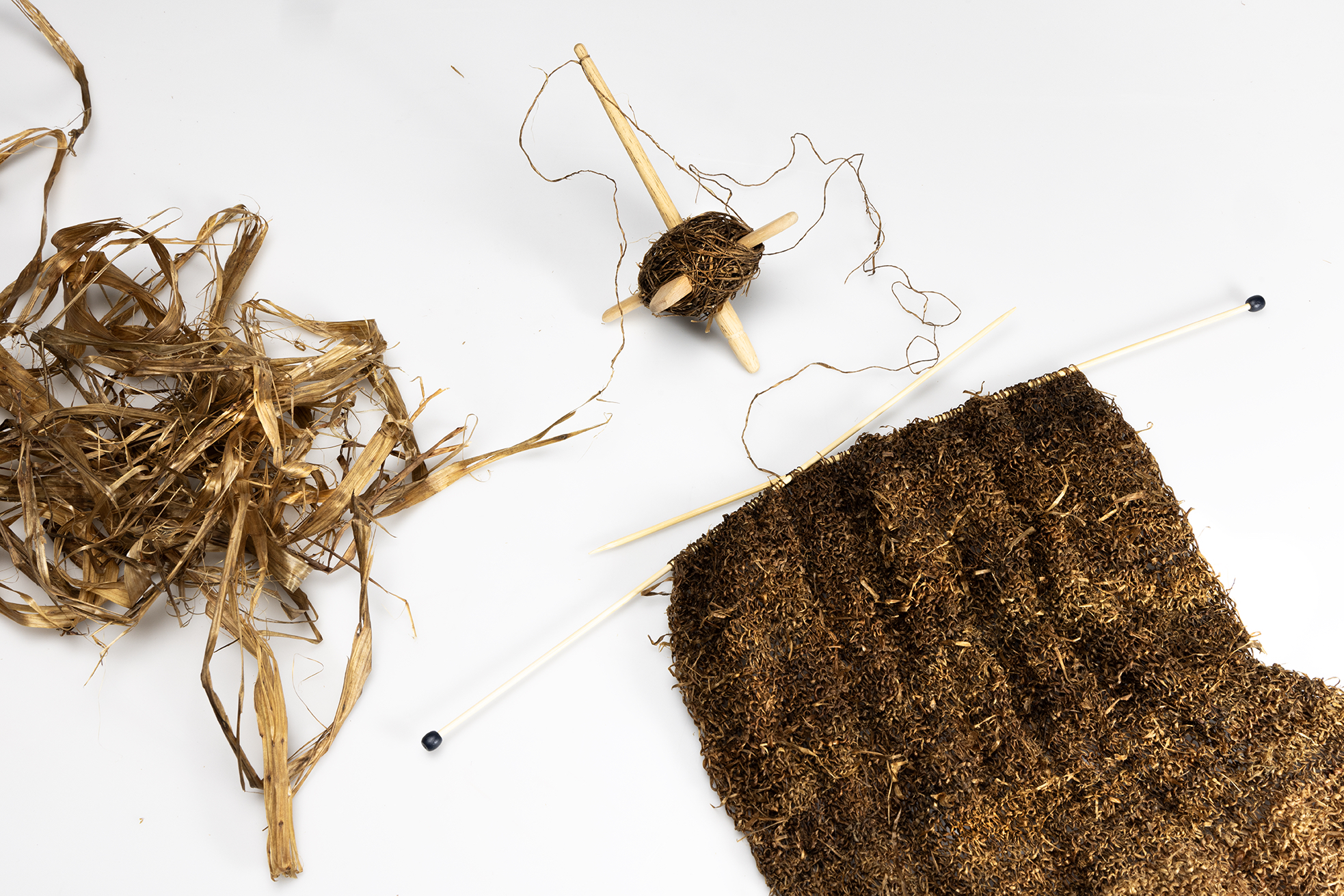
Photo: Iines Jakovlev
Knit from the Fireweed Stems
by Iines Jakovlev, 2024
Roadside vegetation can be a large, diverse source of plant-based local materials. In Finland, roadsides are usually mown once a summer, and studies have shown that mown
vegetation should be removed to increase the biodiversity and reduce the eutrophication of the area. This experimental fireweed project explores the potential of one of the most common plants on the roadsides. During the project, fireweed bast fibres were collected during wintertime, spun into yarn using a drop spindle, and knitted into experimental textiles.
Photos: Anne Kinnunen, Aalto University
Wood-based Textile and Colour
by Helena Westerback, 2024
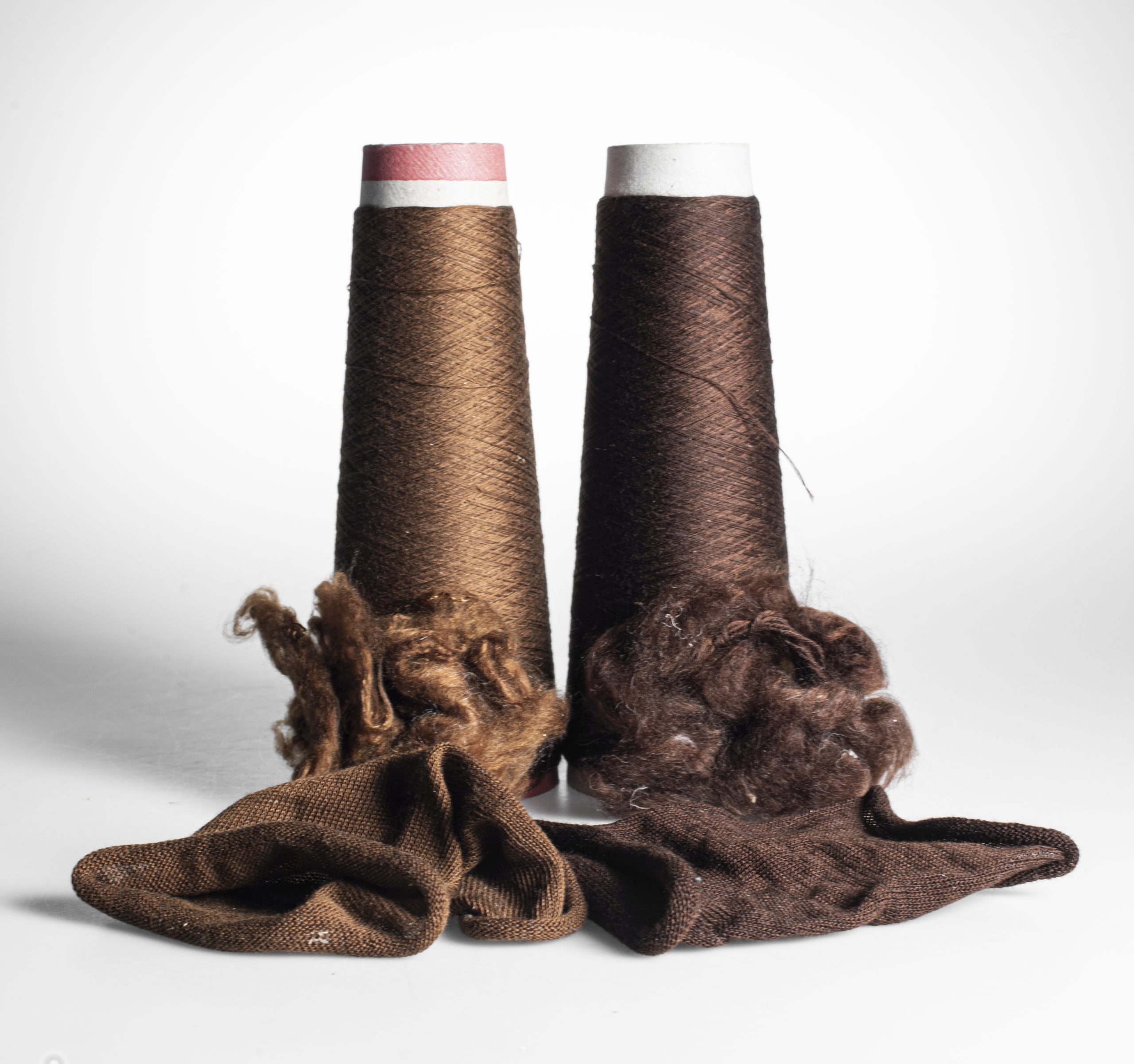
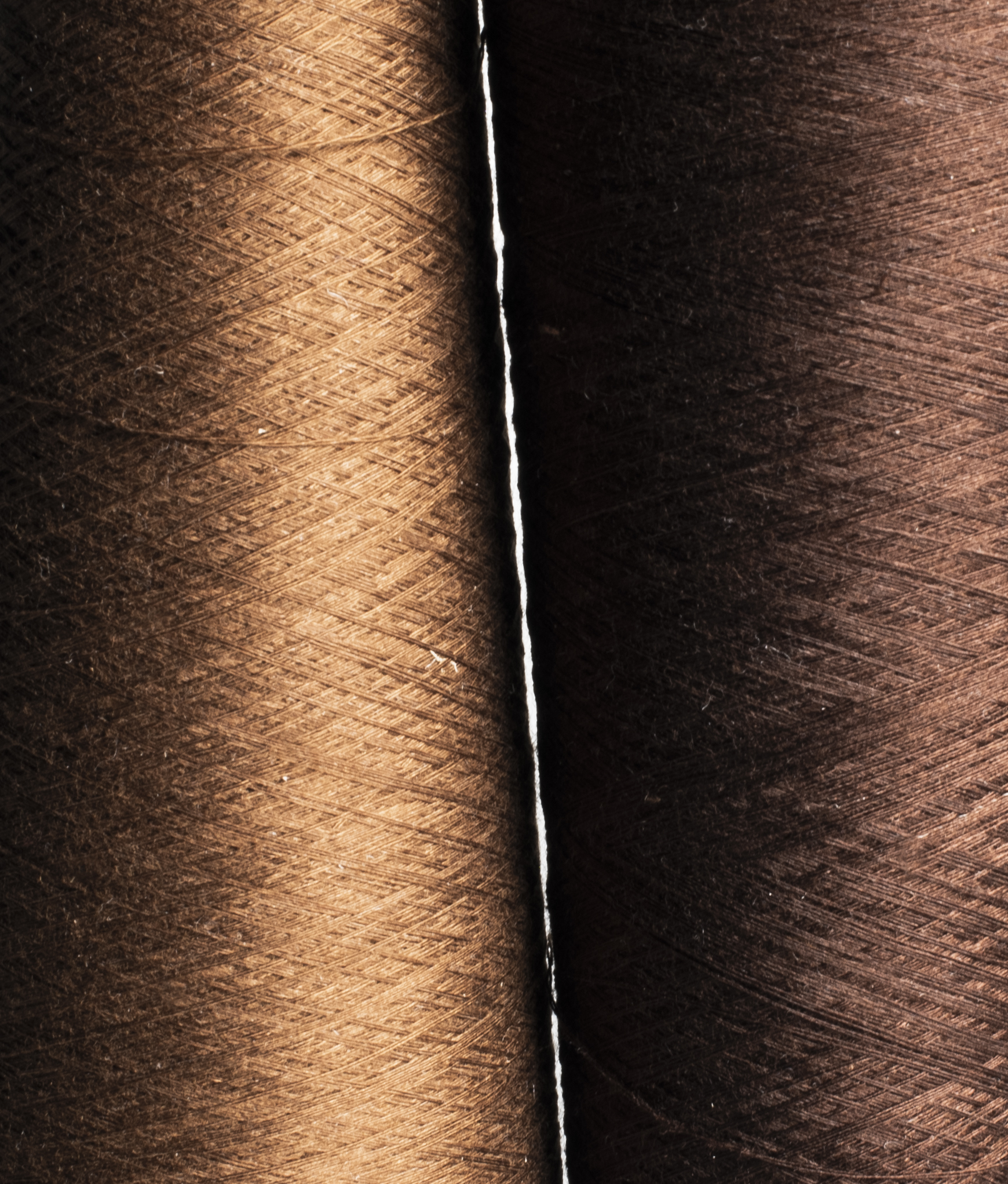
Most of our outdoor garments rely on synthetic fabrics for water-repelling properties. Moving away from oil-based products, new solutions are needed to gradually replace most of the synthetic fibers. In collaboration between business, chemistry, and material science, this project explores biomimetic approaches to produce water-repellant cellulosic textiles. By studying how nature achieves hydrophobicity, this property can perhaps be achieved with bio-based chemicals. The textile fiber is produced using the Ioncell process, and the brown shades are the natural colour of lignin.
In collaboration with Aalto University Bioinnovation Center.
CHEMARTS Tomorrow’s Material Archive
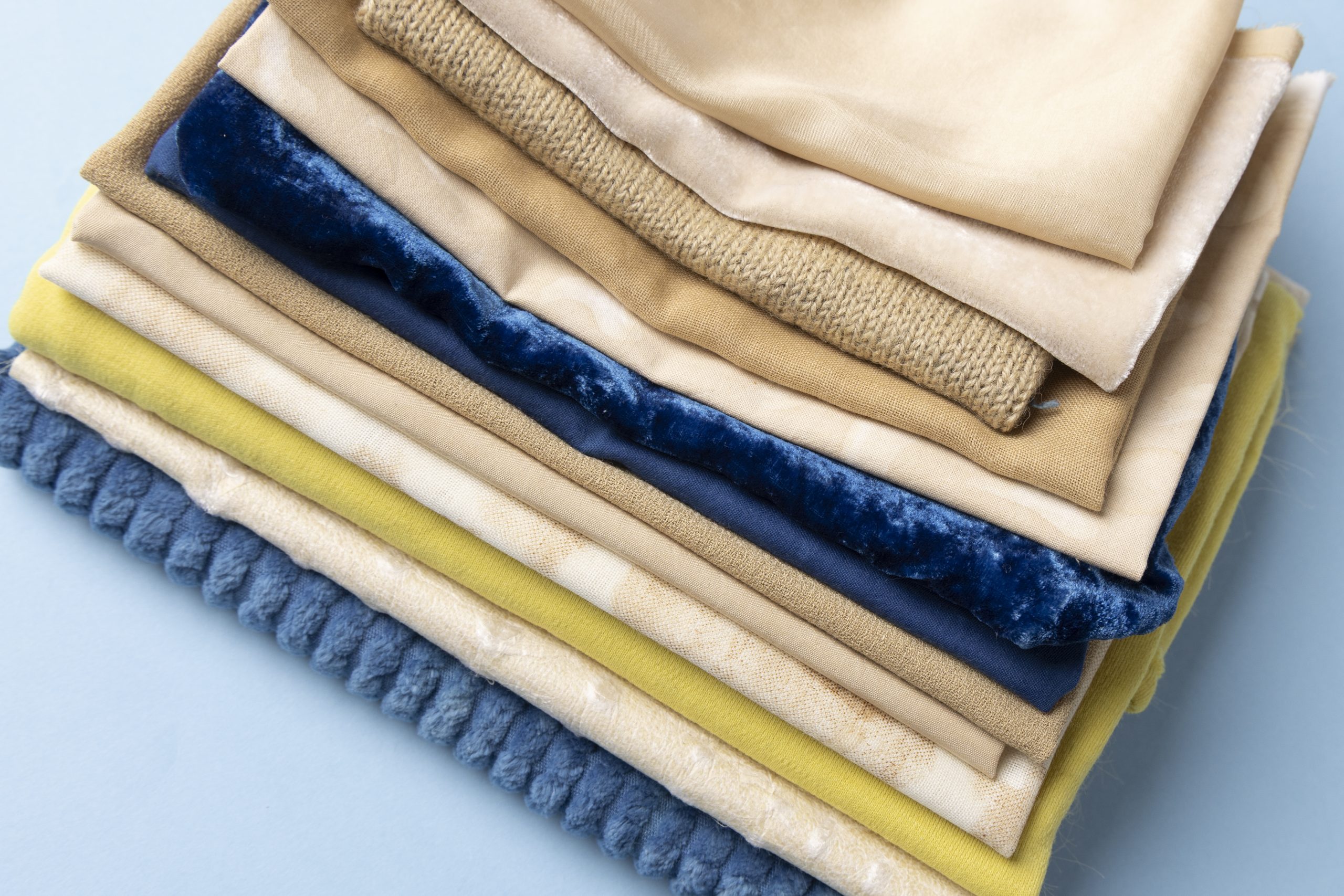
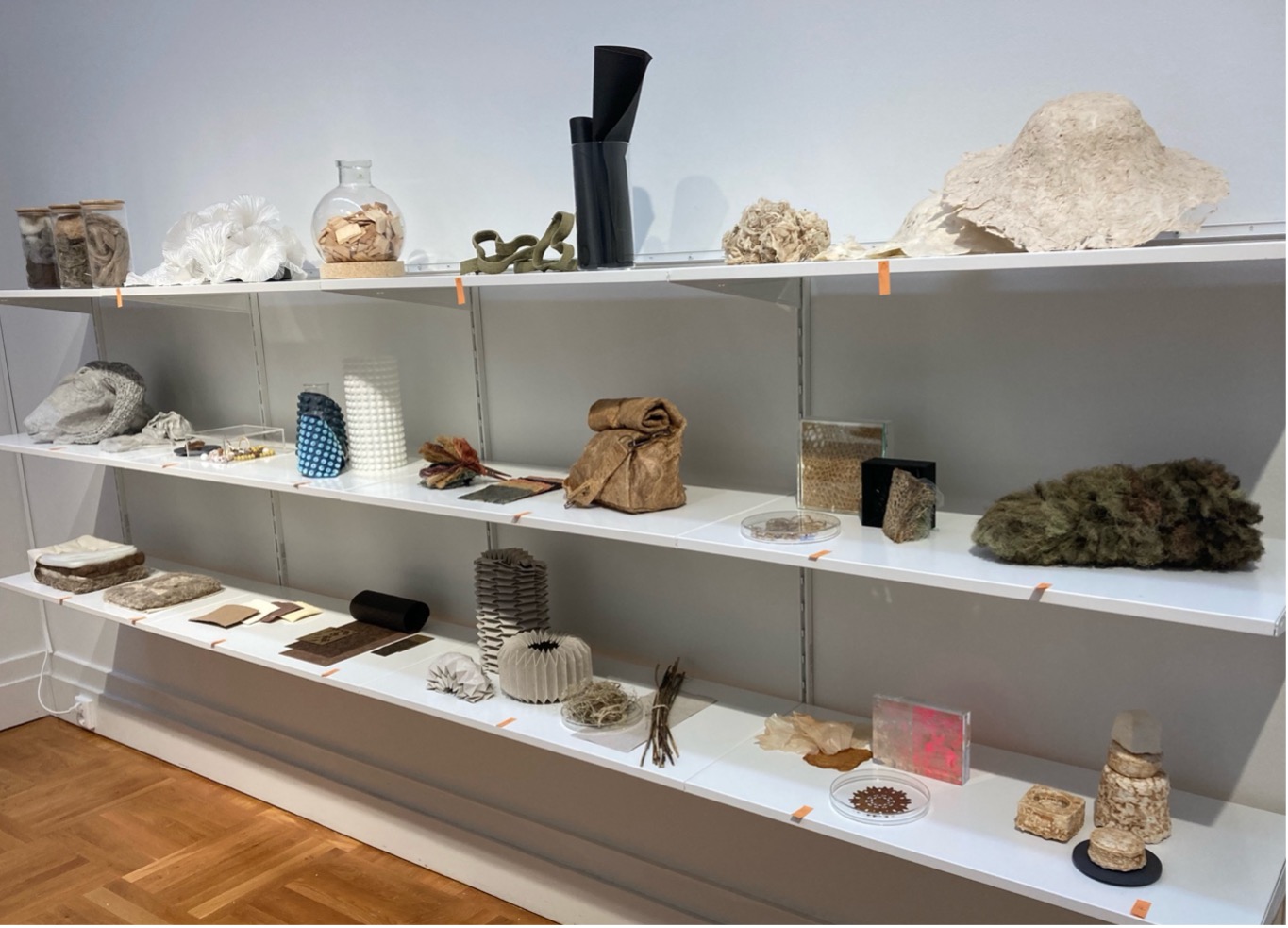
Traditional natural materials – wool, flax, hemp, and nettle – are currently attracting interest from both designers and researchers. In Finland, sheep farms that raise native breeds need new applications for their unique wool. At the same time, the cultivation of flax, hemp, and nettle for material production is being developed, and new methods for processing fibers are being sought. Wood has been used as a raw material for textile fibers for over a hundred years (e.g., viscose, lyocell, modal), but more environmentally sustainable processes have recently been developed for its use.
These methods can also be applied to utilizing various plant-based side streams as well as to textile recycling. Fast-growing algae are among the most widely studied raw materials for cosmetics, medicine, and materials; algae are both harvested and cultivated. In biodesign, experiments explore how materials can be grown using fungal mycelia and bacteria, or by leveraging, for example, plant root systems. Natural materials also inspire artists. Furthermore, in materials research, synthetic biology is advancing rapidly, and in the coming years many materials will be produced with its help, by growing them in laboratories.
Photos: Esa Kapila.
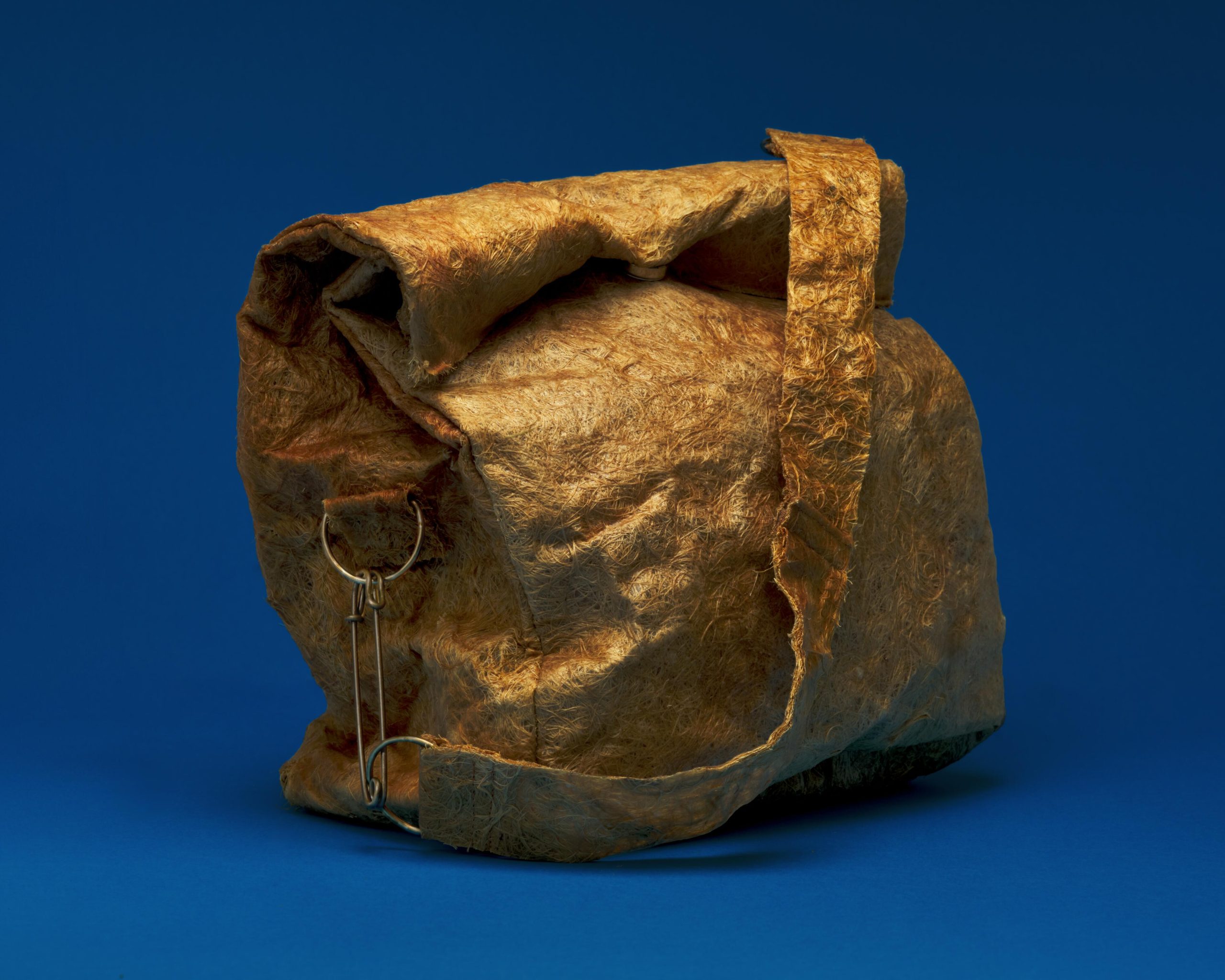
Bag made from Algae
by Anna van der Lei & Elizaveta Lingonberg, 2025
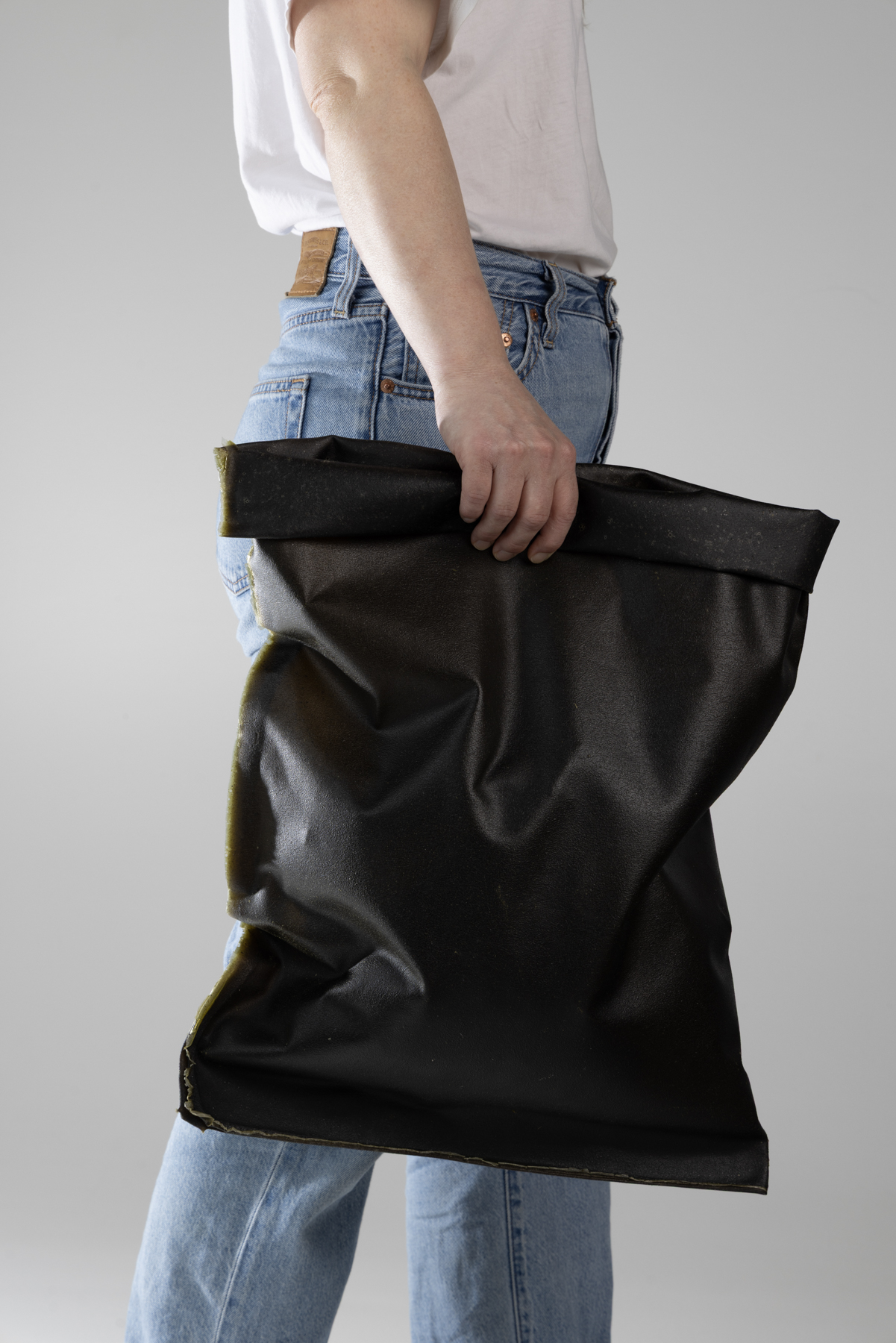
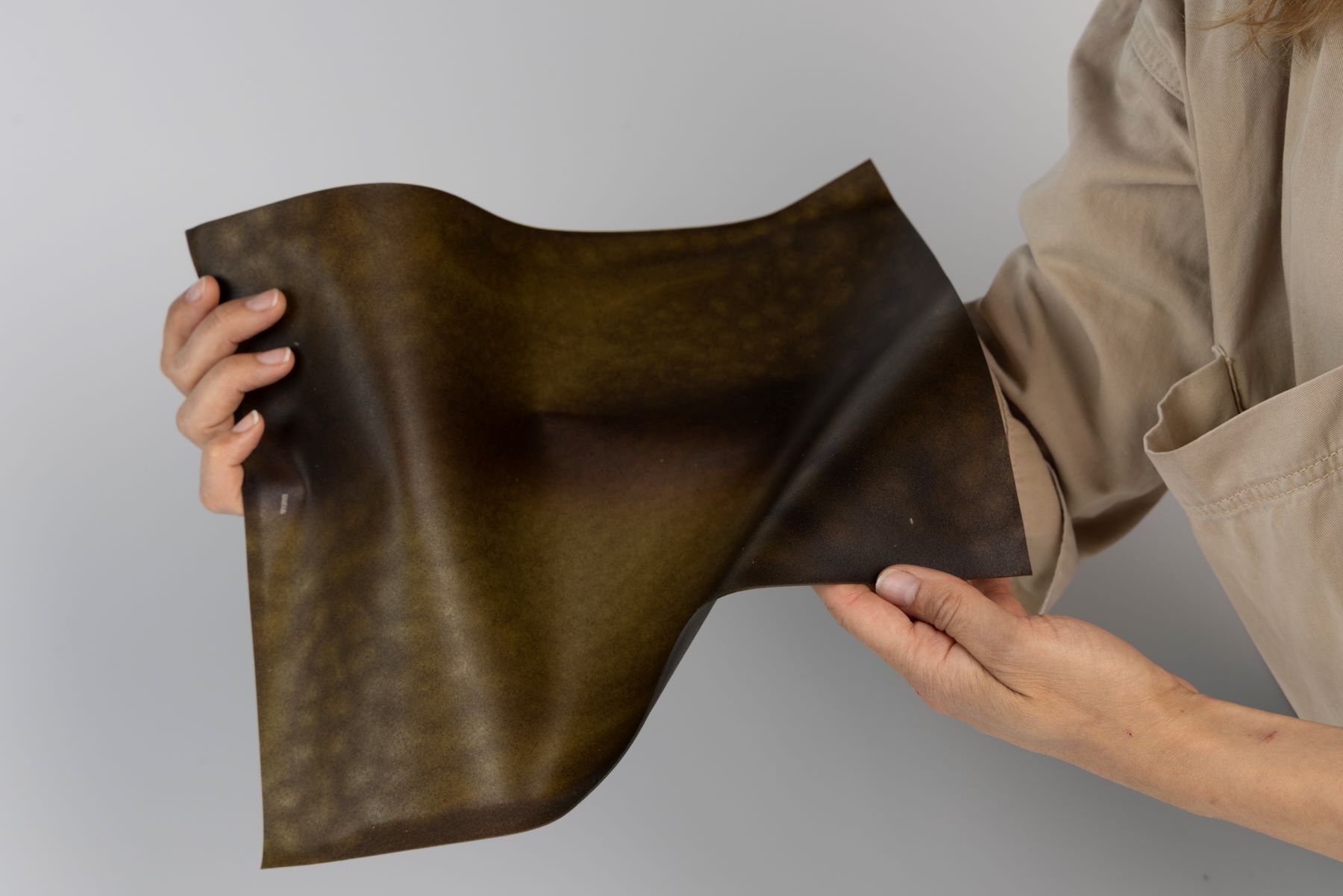
The bag is made from a by-product of the Nordic SeaFarm in Sweden, where seaweed is grown on ropes for a more regenerative approach to seaweed farming. The production process creates a fine powder as a waste stream, which in this project is used to produce a bio-based, leather-like algae material.
In collaboration with Nordic SeaFarm, Julia Lohmann, Fredrik Gröndahl (KTH) & CHEMARTS Lab.
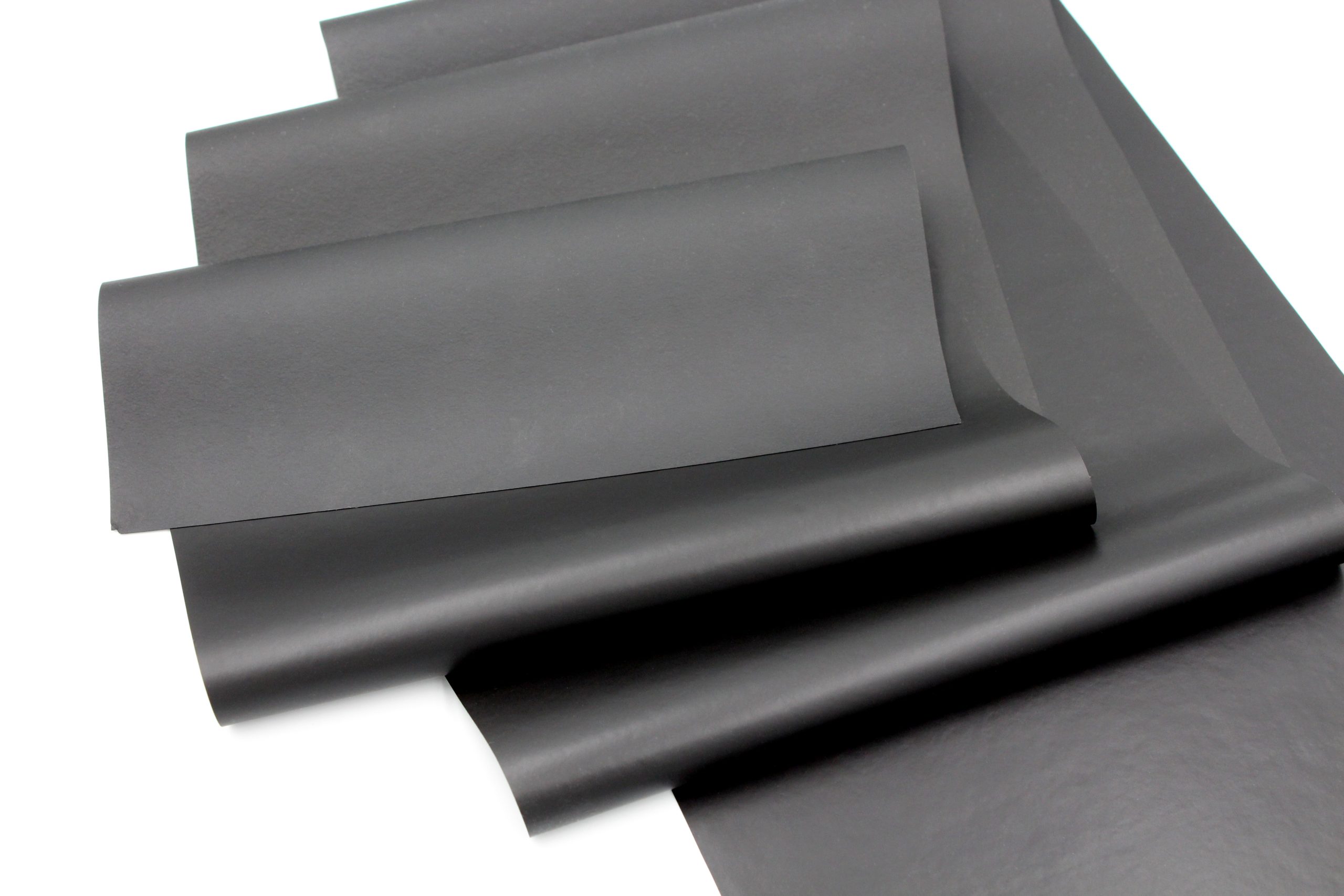
Photo: Manuel Arias Barrantes
Materials Formed from Mycelium
by Manuel Arias Barrantes & VTT, 2024
By harnessing the power of mycelium through submerged liquid fermentation, this research project explores the large-scale production of mycelium-based materials that could potentially replace plastics, leathers, and foams across multiple industries. The process for making these materials involves bioreactor synthesis, in which a nutrient-rich liquid medium is used to grow a thick mycelial pulp. Mycelium biomass is then harvested, formulated with various bio-based additives and colorants, and processed to achieve the desired material properties. The material chosen for this exhibition is a dyed, mycelium-based non-woven fabric that could potentially replace animal leather in the near future.
In collaboration with Géza Szilvay and Lauri Peuhkurinen, VTT Technical Research Centre of Finland and LIBER Centre of Excellence funded by Research Council of Finland.
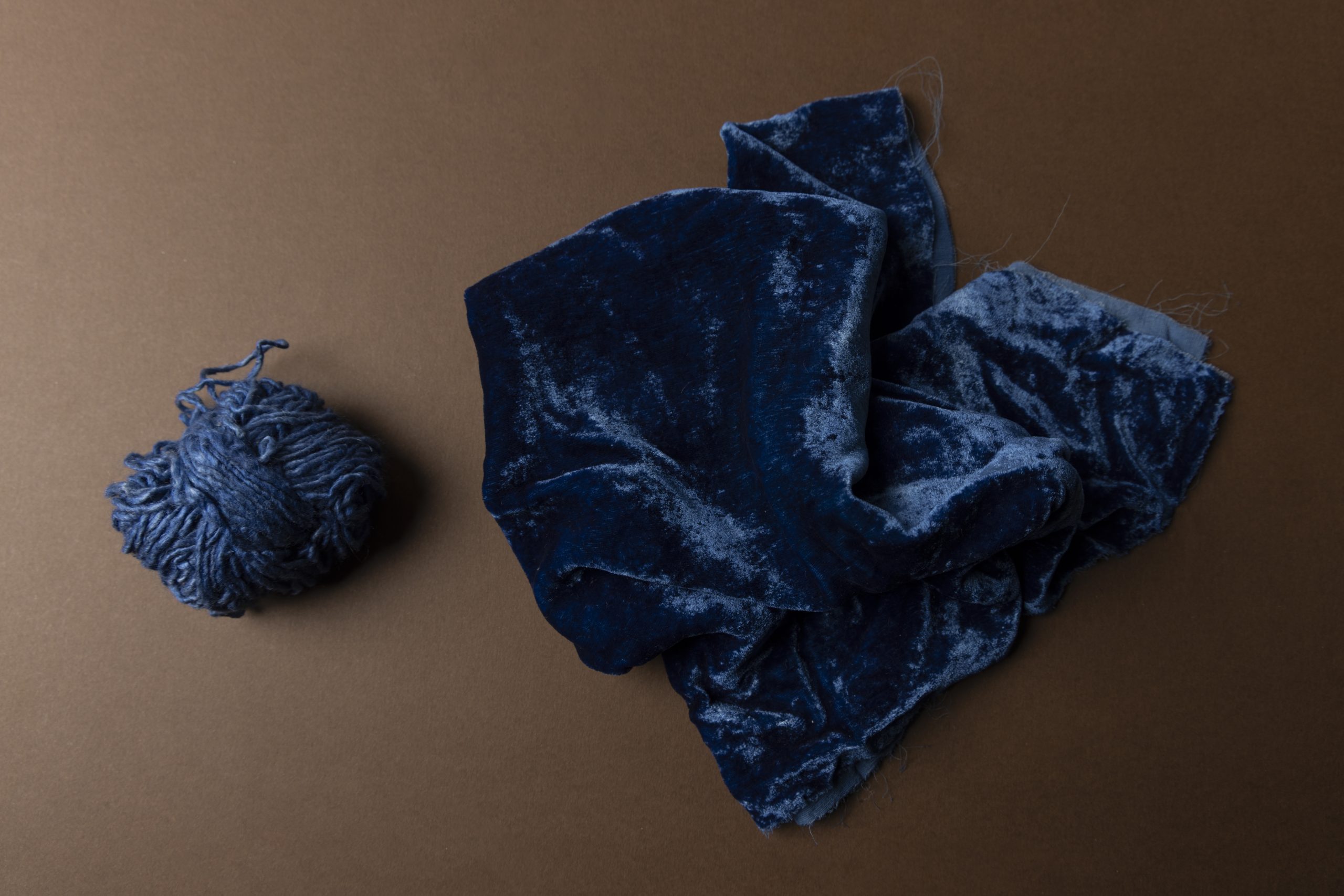
Photos: Esa Kapila, Aalto University
Textile Colours from Waste Coffee, Tansy and Dyer’s woad
by Pirjo Kääriäinen & Kirsi Niinimäki, 2026
Various plants or bio-based materials, or even waste can be used as sources of textile dyes. Plants can be collected from the wild (e.g. tansy) or cultivated commercially (dyer’s woad). Side streams from the food industry and agriculture also provide materials for dyeing textiles here, for example, waste coffee from an industrial coffee roastery.
In collaboration with Pasi Ainasoja, Natural Indigo Finland.
Also showcased
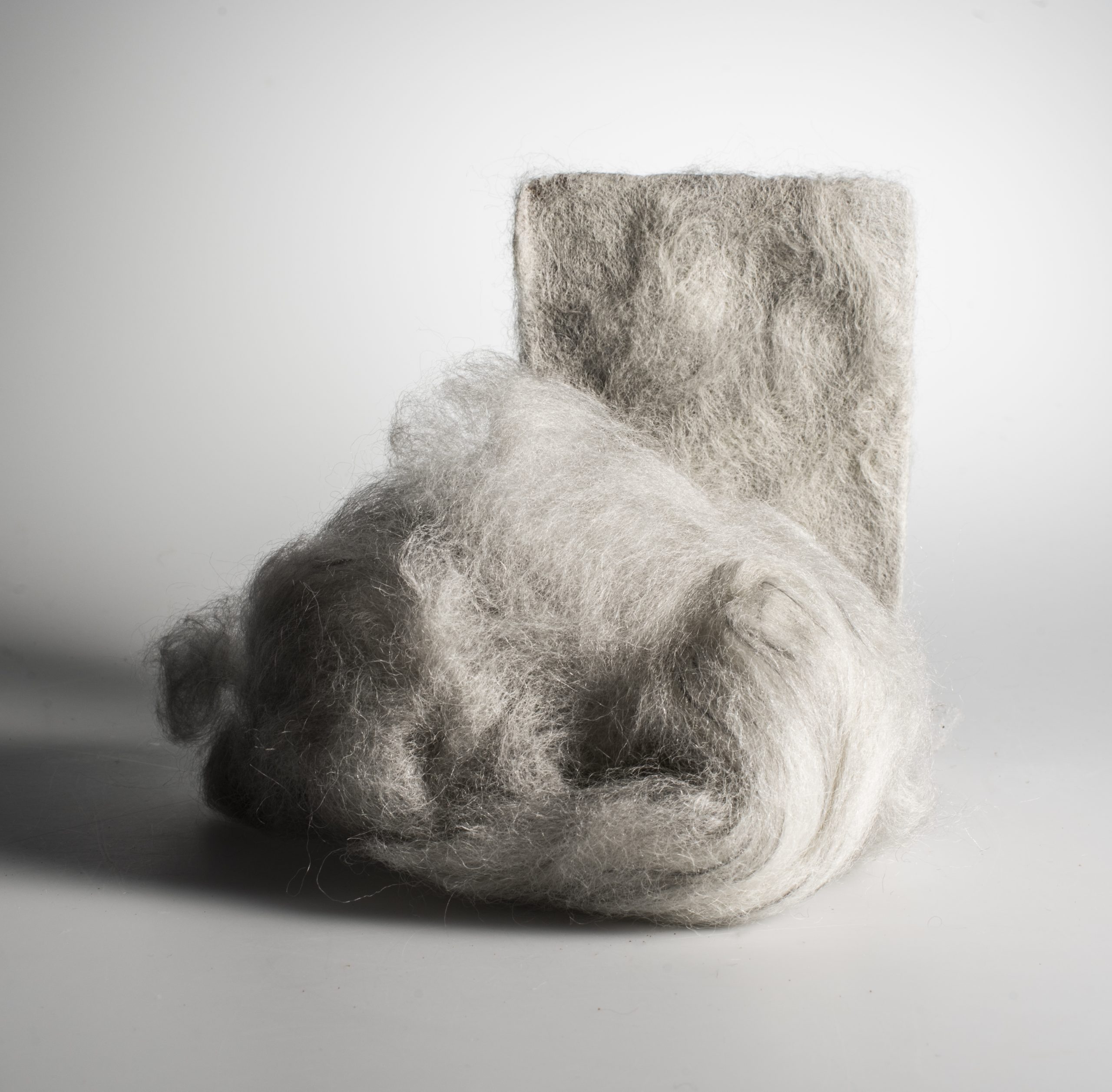
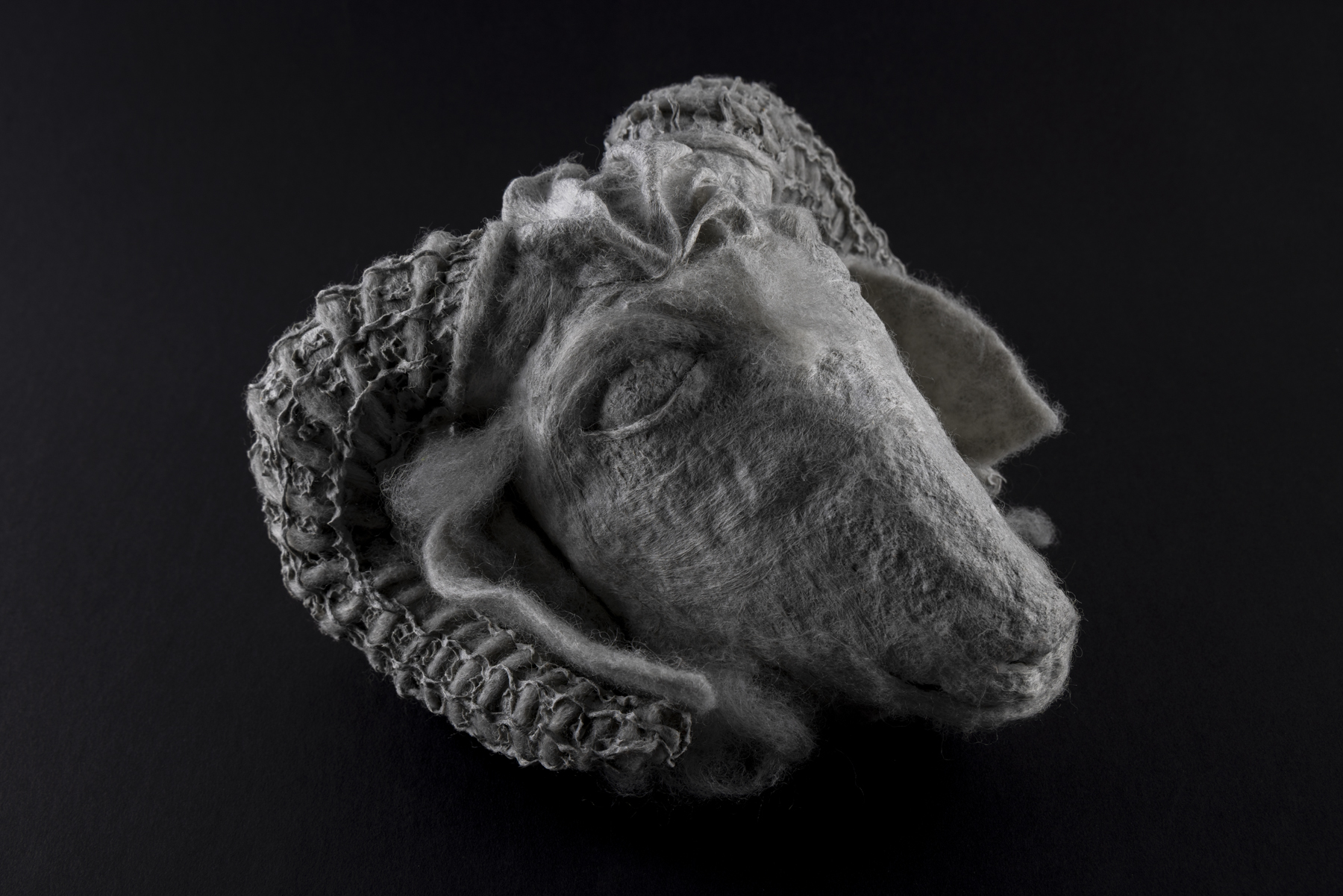
Photos: Esa Kapila, Anne Kinnunen, Aalto University
Lamb wool
Maike Panz
Coarse wool from the European dairy and meat industries is currently regarded as a worthless by-product and much of it ends up in landfill sites or is burned. How can we transform our perception of this undervalued material and its producer, the sheep? The conceptual art project uses wool as a raw material to create a sheep mask inspired by Tutankhamun’s death mask, reconnecting the material with its origins in a respectful way.
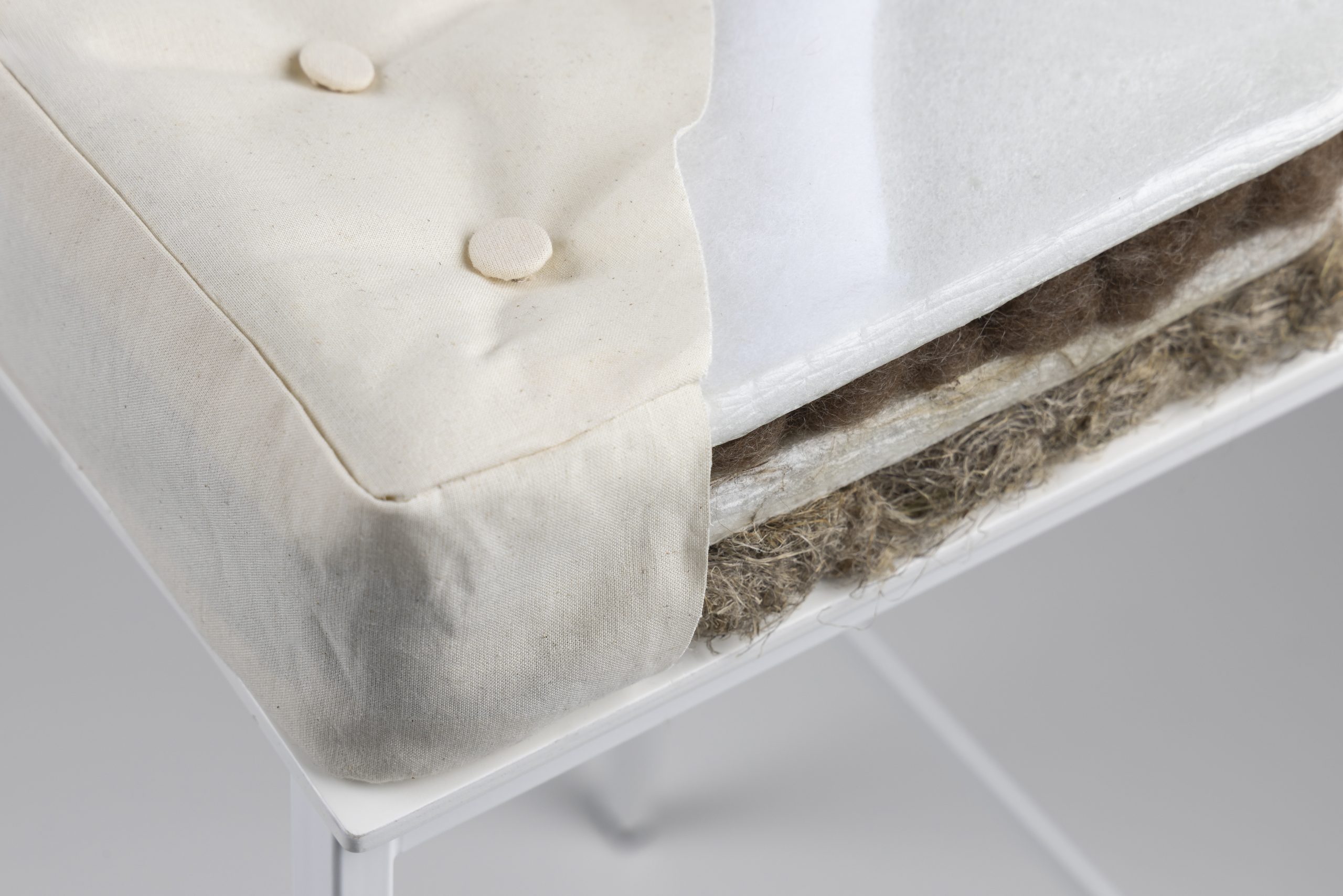
Photo: Esa Kapila, Aalto University
Flax, wool, wood
Daniela Ala-Keturi
Historically, upholstered furniture was made from natural materials such as hemp and wool, which have now been replaced by fossil-based materials. In this project new cushioning alternative was developed by layering bio-based cellulose foam alongside with these traditional materials. The wood-based foam tested in this cushioning resembles the plastic alternatives commonly used in industry.
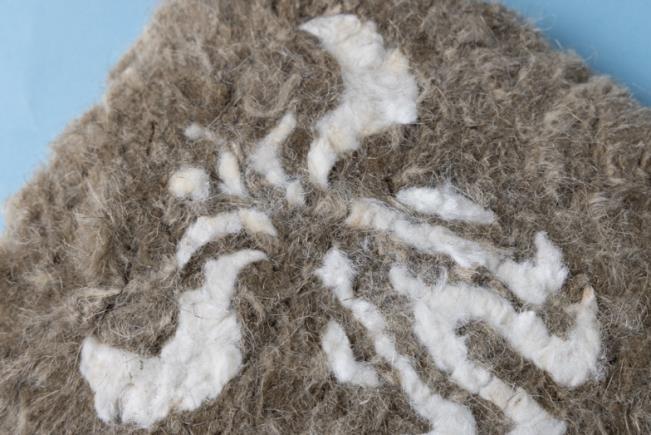
Photo: Esa Kapila, Aalto University
Flax, hemp
Natasa Hódosi
Inspired by the qualities of fur-like textiles, the Bio-based faux fur project explored bio-based materials such as plant fibres, microcrystalline cellulose and natural rubber to create a soft surface. Unlike knotted or woven textiles, the sample consists of hemp and flax fibres that are attached directly to a flexible base layer.
Photos: Megan McGlynn, Aalto University
Wood, corn
Megan McGlynn
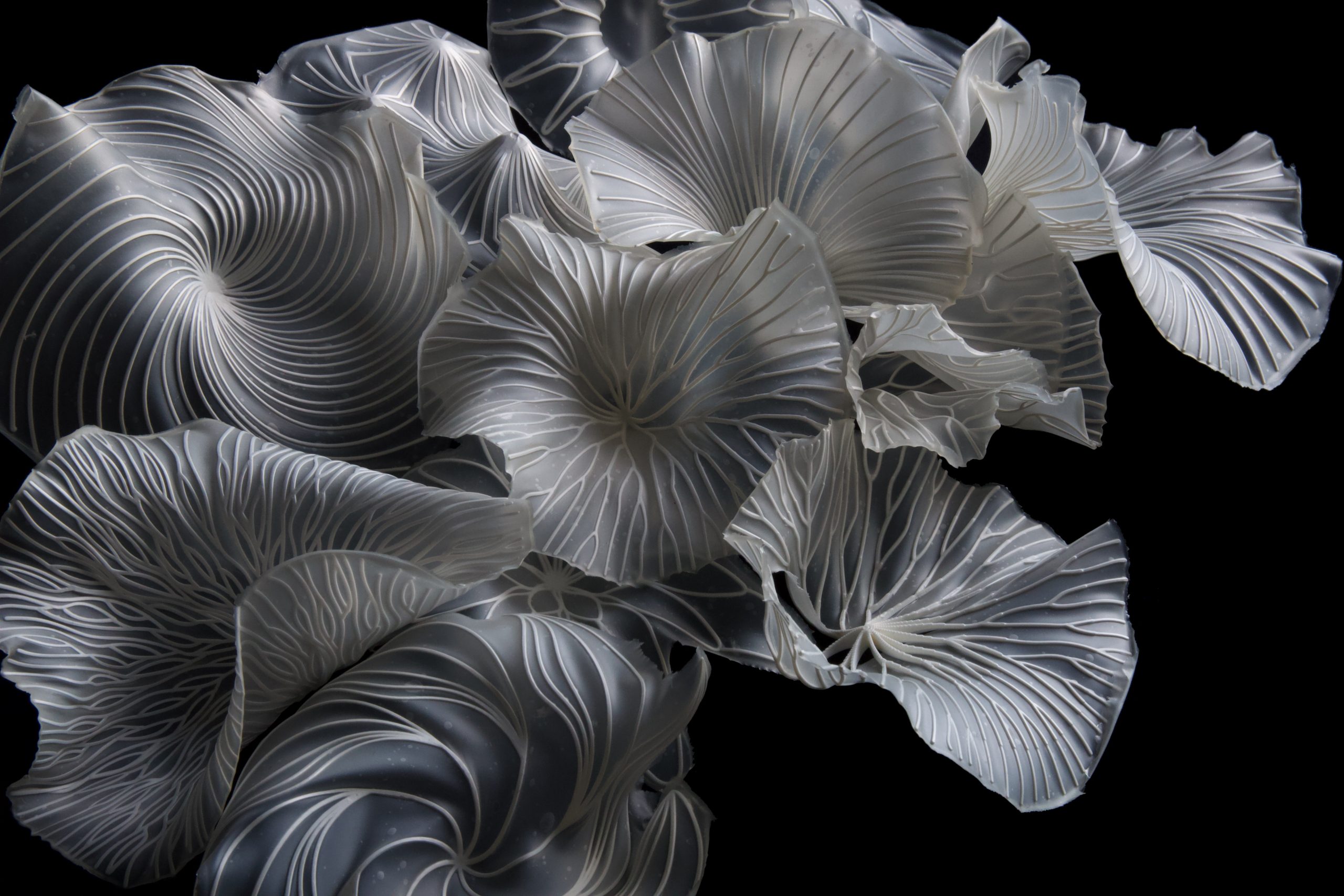
This experimental design project is centred around the interaction of two renewable materials: bioplastic (PLA, polylactic acid) and nanocellulose. Shrinkage is an intrinsic quality of drying cellulosic materials, often made of wood. When water evaporates from nanocellulose, the fibrils are pulled tightly together and form strong chemical bonds. Encasing various shapes between layers of nanocellulose creates tension in specific directions and produces self-forming curvatures.

Photo: Esa Kapila, Aalto University
Wood
Pirjo Kääriäinen, Iines Jakovlev, Niko Partanen
Jewellery is often made from precious and recyclable metals and stones that retain their value for generations. The use of bio-based materials and do-it-yourself methods offers an alternative – and fun – approach. It doesn’t matter if the jewellery breaks, as the parts can be recycled or disposed of in a bio-waste bin. The bio-based materials used in the jewellery such as saw dust and microfibrillar cellulose are mainly found in nature and in the kitchen.
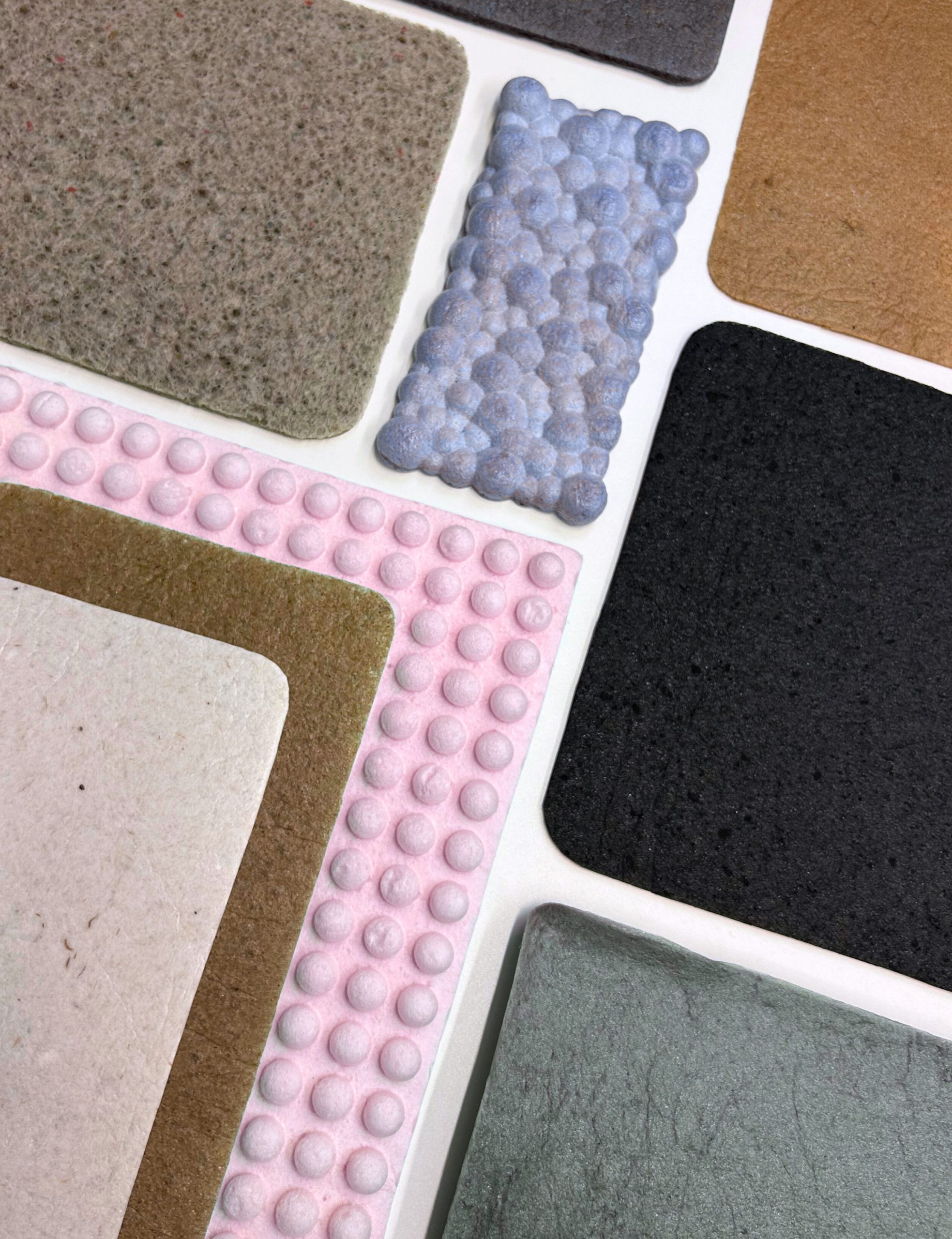
Photo: Bubbles with Benefits
Wood
Bubbles with Benefits
The global amount of plastic waste is forecasted to triple to over 1010 million tonnes by 2060. The Bubbles with Benefits research project focuses on developing sustainable packaging materials, including 100% bio-based bubble wrap and packaging foams. Made from wood-based cellulose, these materials are plastic free, non-toxic, biodegradable, and can be customised to suit any brand’s look.
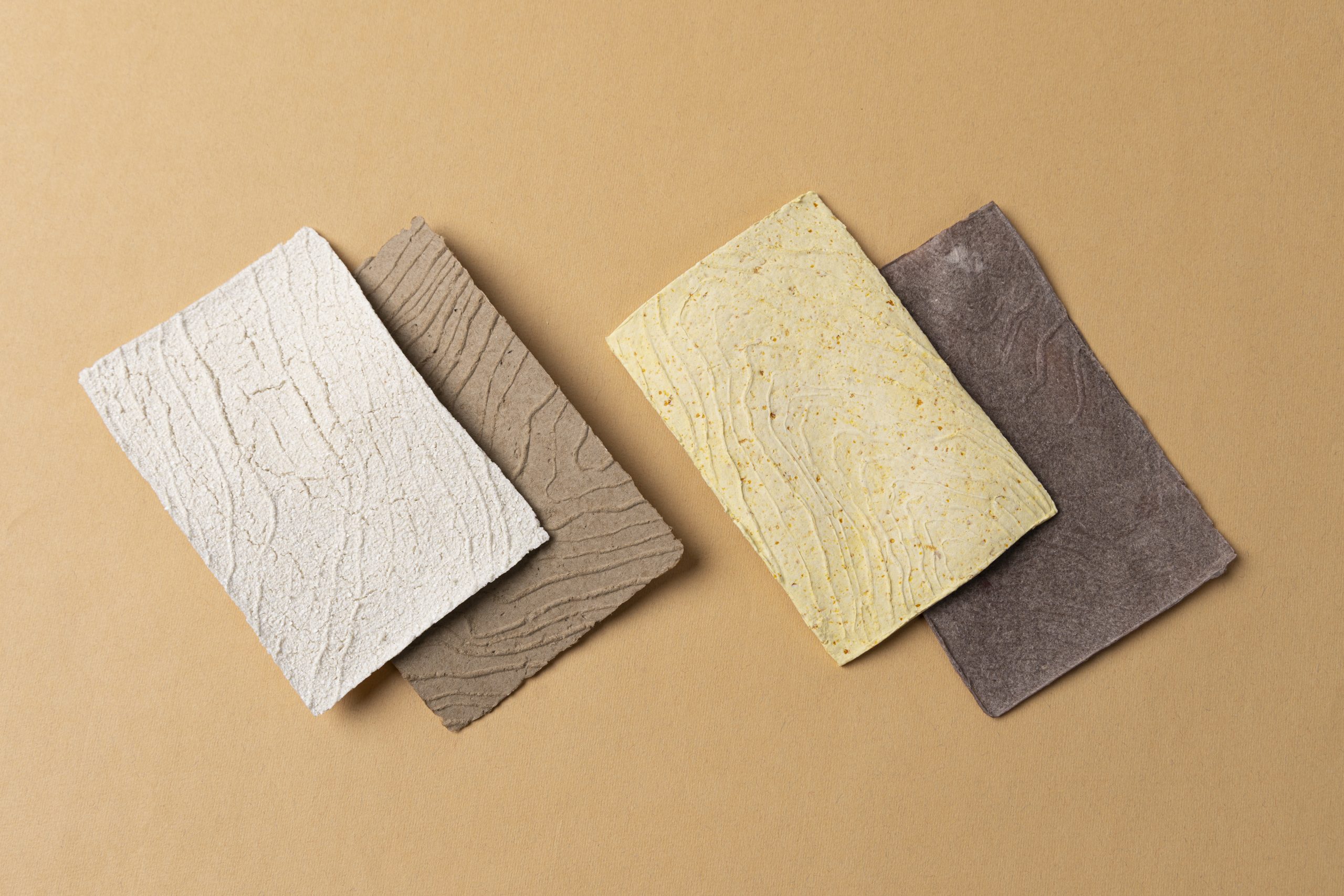
Photo: Esa Kapila, Aalto University
Wood
Greta Isola
Different kinds of experimental materials with beautiful surfaces can be made from wood- and plant-based materials. These samples have been made from sawdust, coffee waste and orange peels, combined with other bio-based ingredients for the structure.
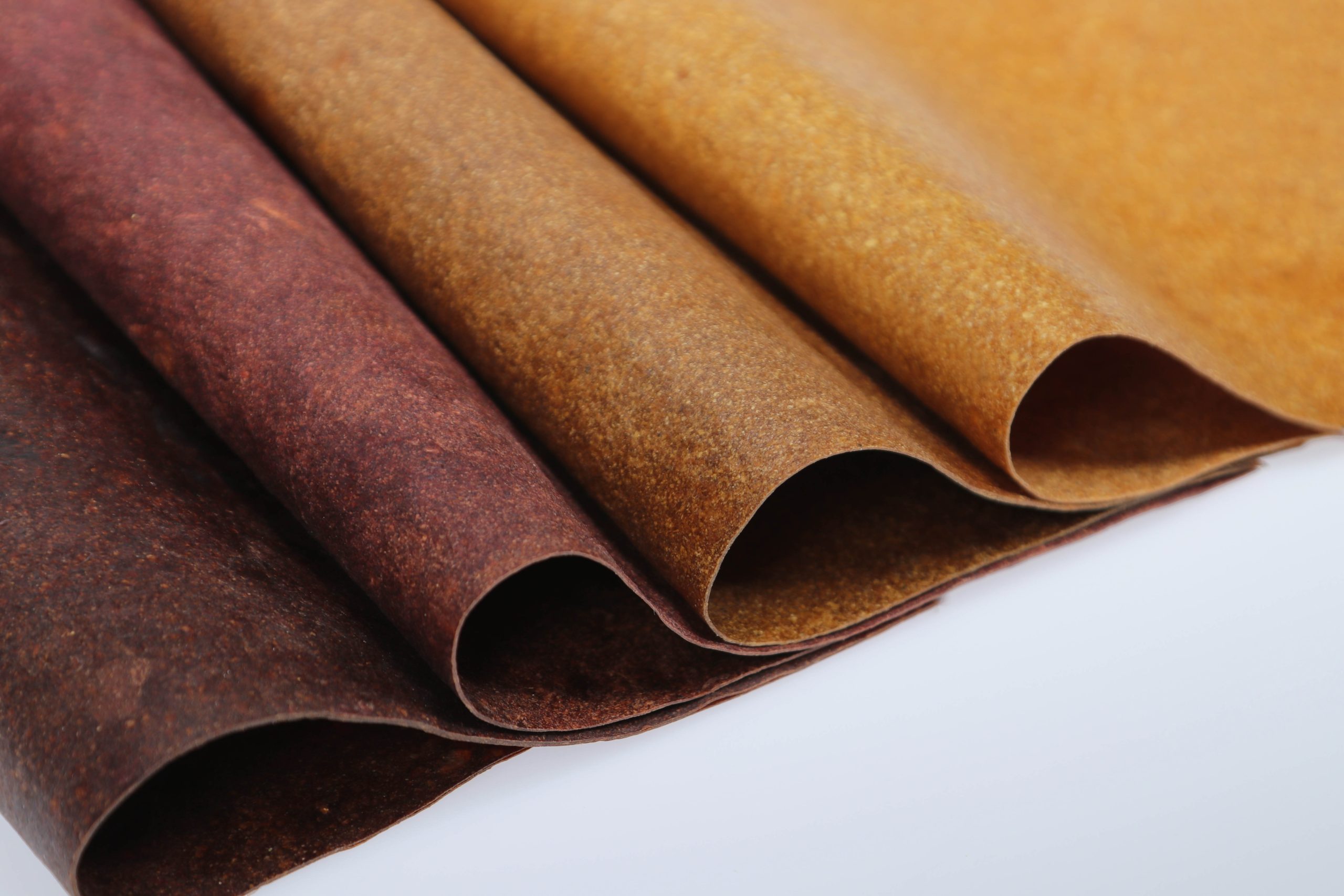
Photo: Irene Purasachit
Flower stems
Irene Purasachit
A large proportion of cultivated cut flowers go unused, but they could be used as a raw material. In this project, waste flower stems were used to produce leather-like materials. The material is biodegradable, contains no oil-based ingredients or additives, and does not release microplastics. The color also comes directly from the flowers.
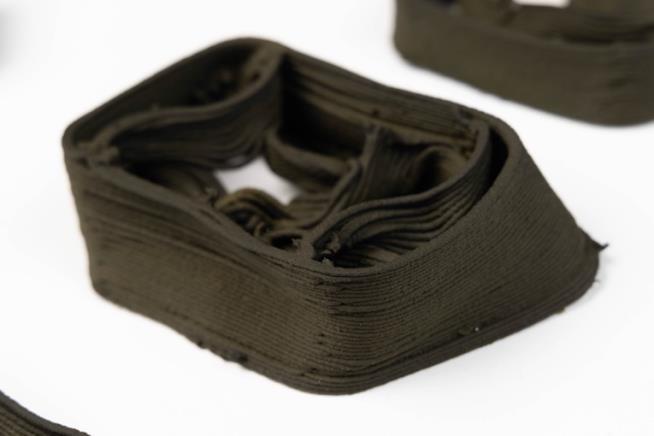
Photo: Esa Kapila, Aalto University
Algae
Anna van der Lei & Hector Velasquez
Using fast-growing algae creates interesting possibilities for material development. This project creates a 3D-printable paste using algae powder, an industrial waste stream. The process requires parallel development of the material for printing and digital modeling to control the drying process.
Photos: Esa Kapila, Aalto University
Algae
Nina Riutta
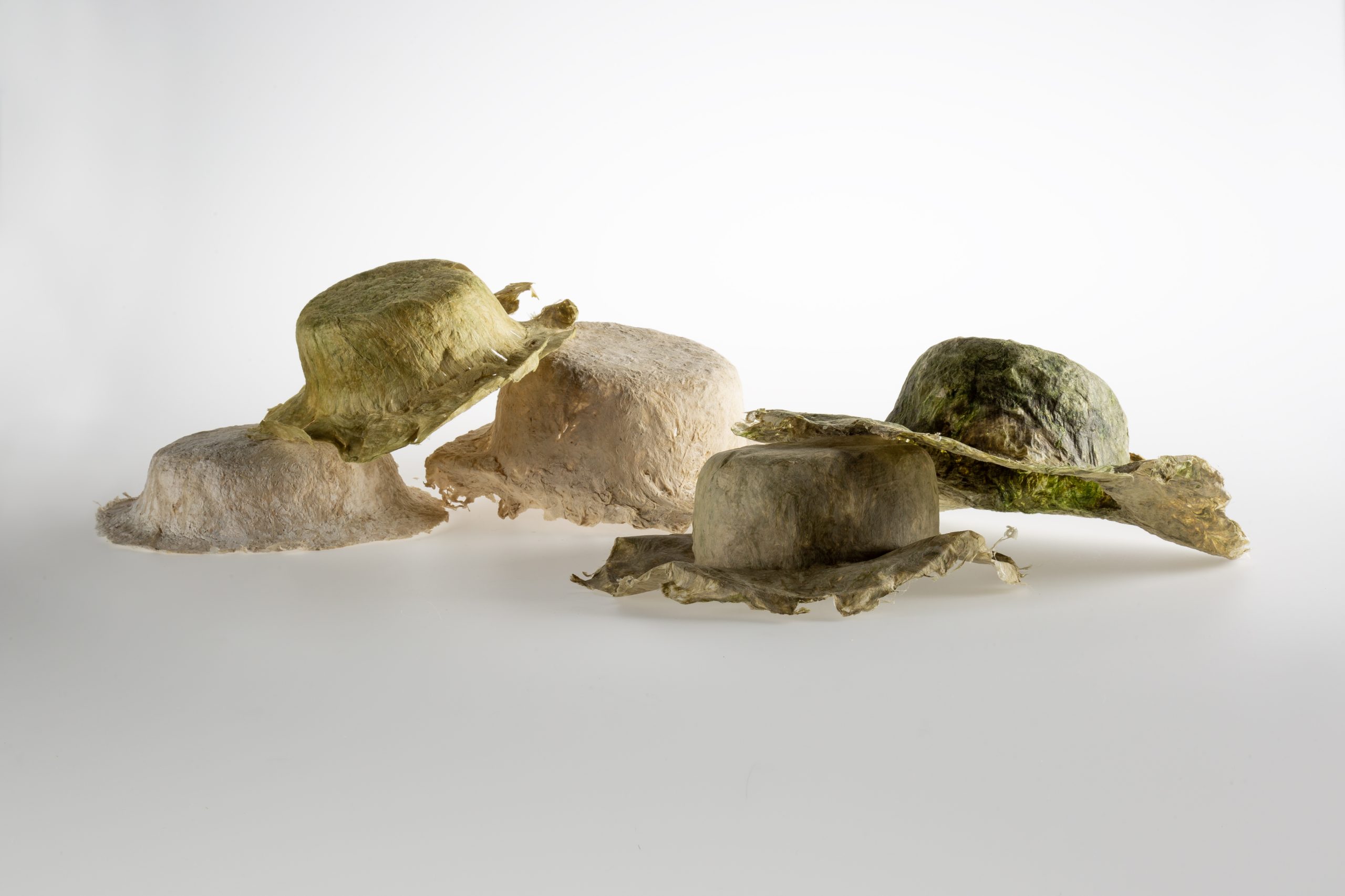
The Algae Hat project investigated the design possibilities of Cladophora glomerata, a filamentous green alga, for biodegradable, single-use applications through material experimentation. The final design concept is a hat that can be made by anyone at home or in nature. The algae “felts” by gently rubbing its surface with hands and environmentally safe soap. When the hat is no longer needed, it can be composted.
Photos: Left: Bryan Saragosa, right: Esa Kapila, Aalto University
Roots
Krista Virtanen, Saskia Helinska, Marja-Inkeri Murphy, Ilona Valovirta
Root mats are a potential by-product of vertical wheatgrass farming. Instead of composting wheatgrass, this project makes leather-like materials from its waste roots and other bio-based materials. This experimental material can be dyed using natural dyes, making it a fully bio-based and biodegradable alternative to various everyday products of the future. It can be sewn and feels pleasant to the touch.
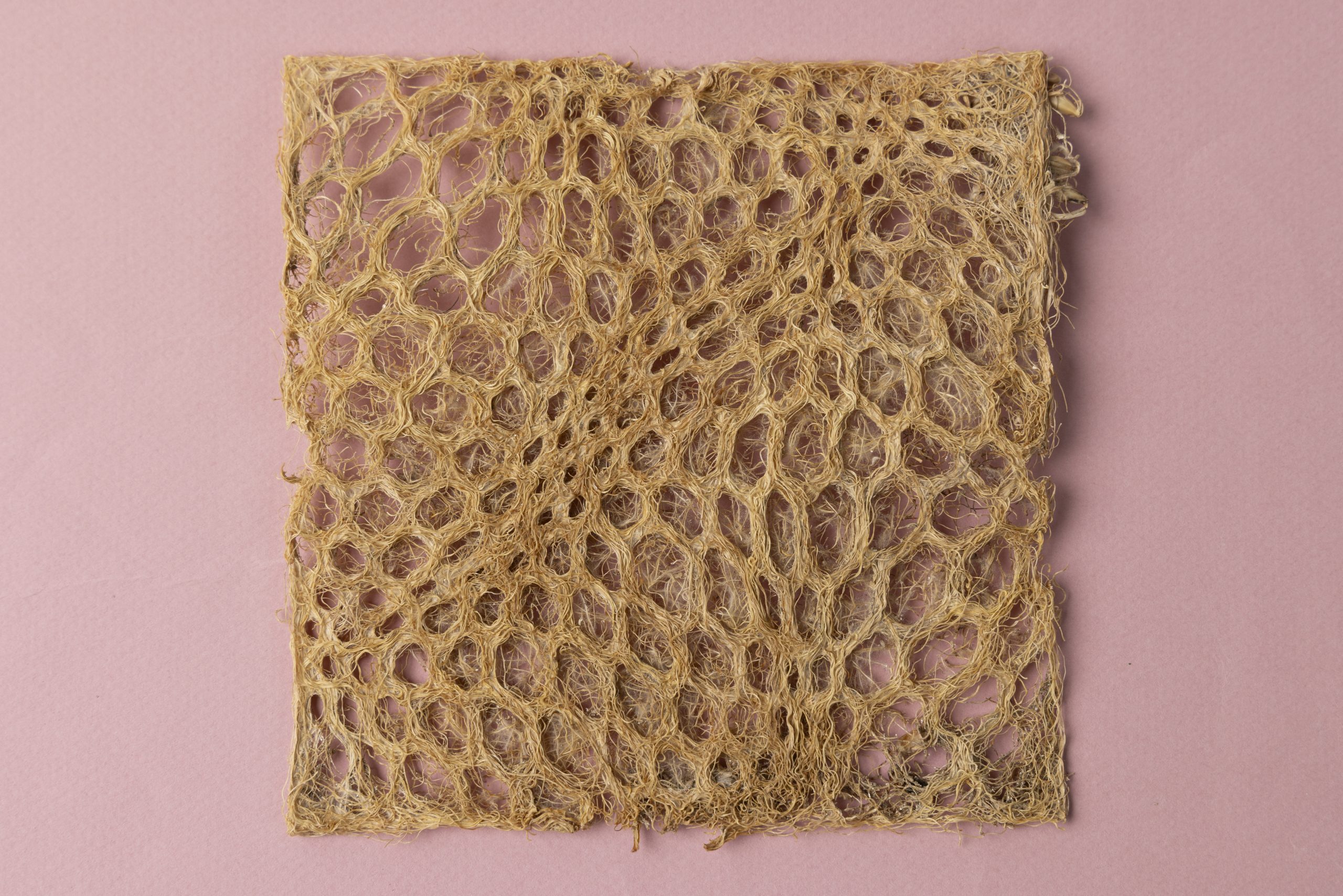
Photo: Esa Kapila, Aalto University
Roots
Ena Naito, BioMakerStudio
These lace-like, delicate root sheets are grown. When wheatgrass grows in 3D-printed molds with a specially designed structure, the roots form shapes as they grow.
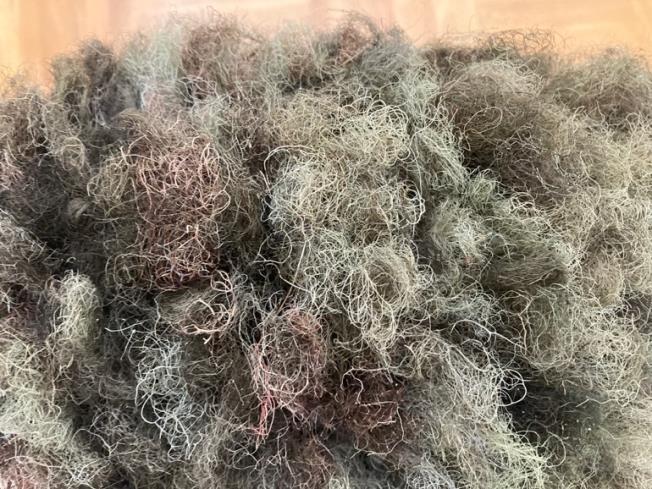
Photo: Pirjo Kääriäinen
Beard lichen
Iines Jakovlev
Finnish forests are a rich source of inspiring materials for art and experimental crafts. Instead of using traditional yarns for piles, this rug was made of beard lichen collected from Northern Finland.
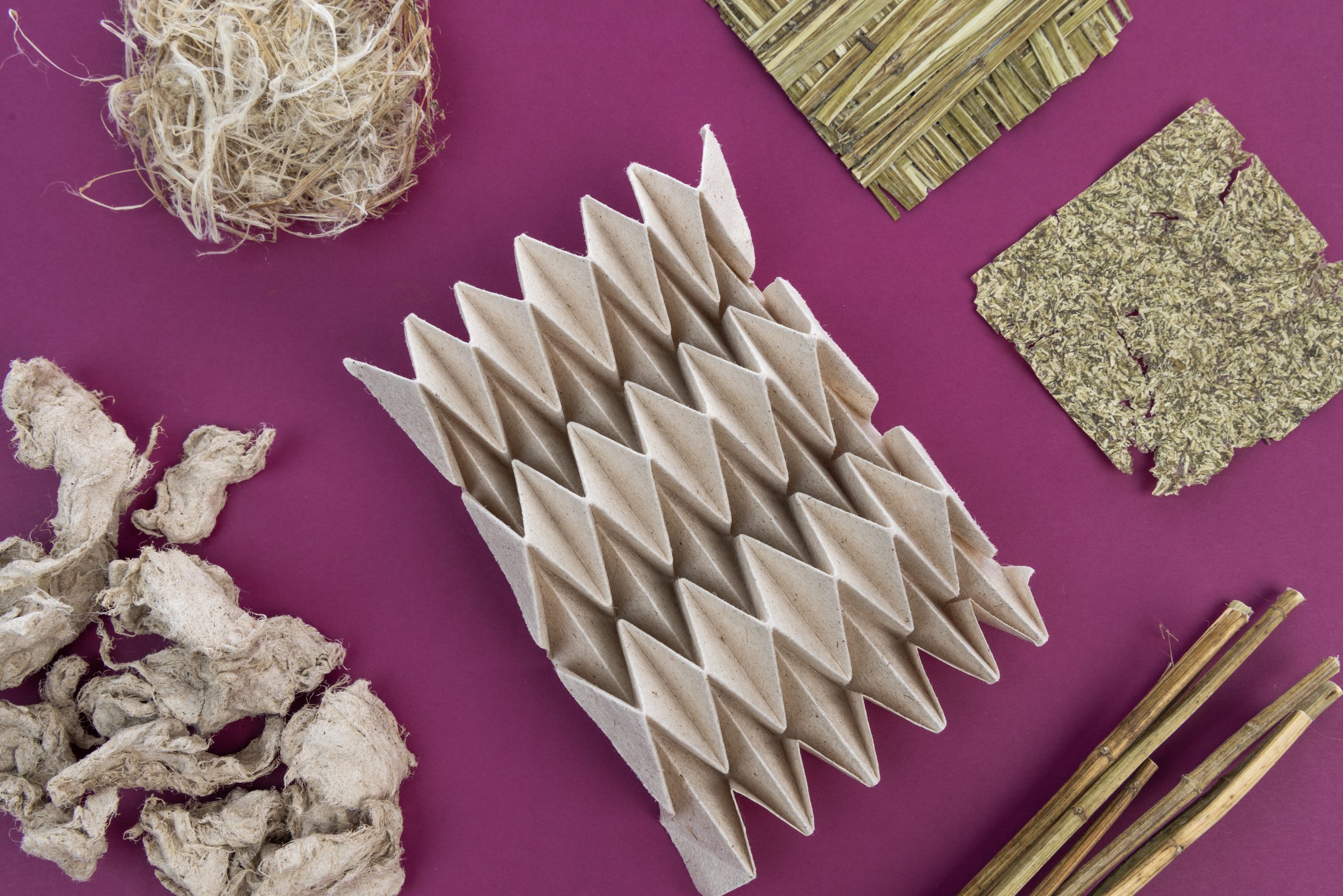
Photo: Esa Kapila
Nokkonen / Nettle
Laureen Mahler
The raw material used for the origami tessellations is local nettle, collected from the wild and turned into paper. The structures can be both highly functional and uniquely aesthetic, used for example for packaging alternatives that offer novel ways to explore reusability and re-purposability.
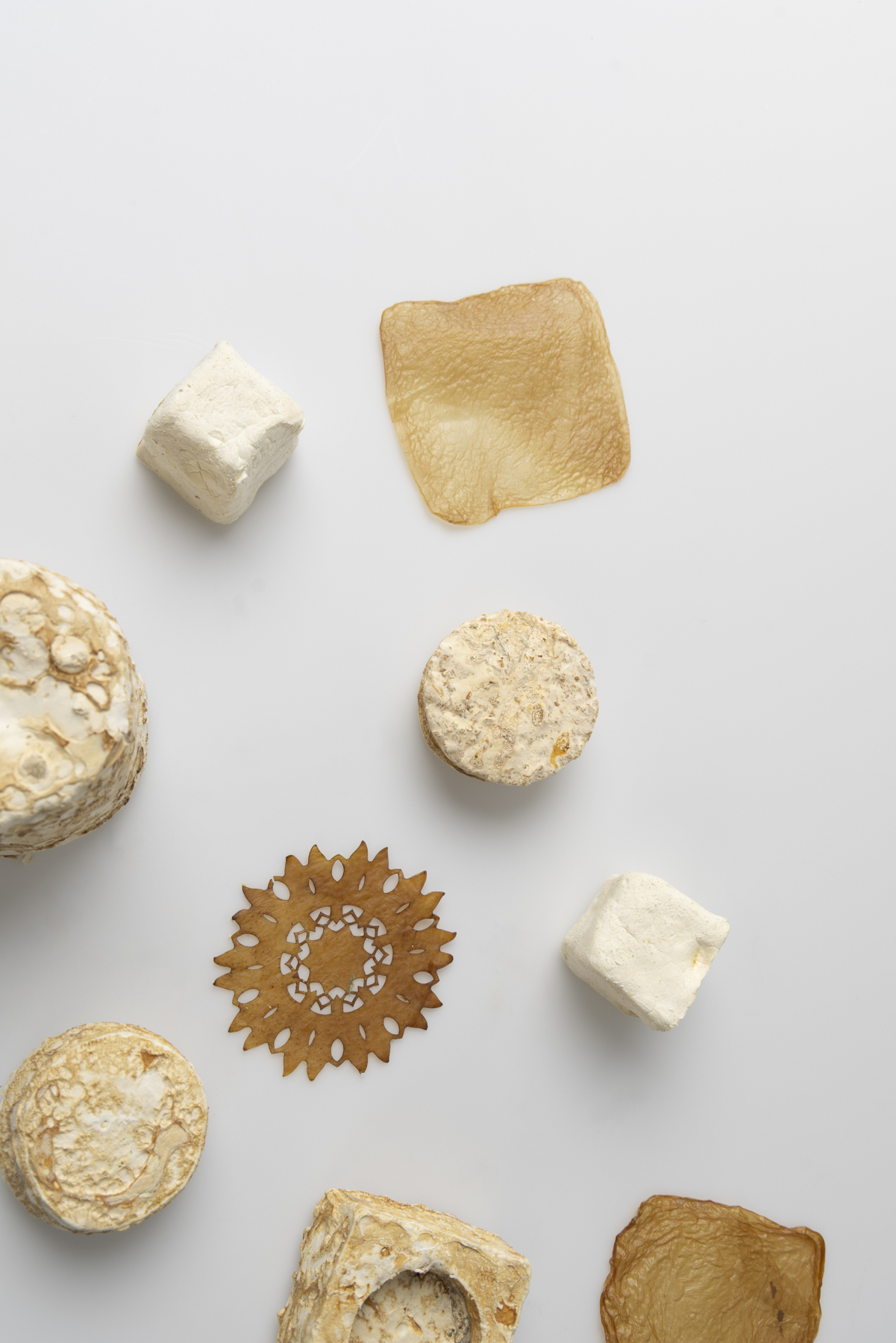

Photo: Esa Kapila, Aalto University
Bacterial cellulose and Mycelium
Many researchers are currently exploring how materials could be grown by using biological processes. These projects show bacterial cellulose, also known as microbial cellulose, and mycelium. Under favorable conditions, certain microbi forms leather-like films and fungi produce new types of materials through the formation of mycelium. Mycelium examples were grown in leftover wood chips in molds to give them shape.
Exhibition contact
pirjo.kaariainen@aalto.fi